Writers of Equestrian Fiction
Ride with us into a world of suspense, romance, comedy, and mystery --
Because life always looks better from the back of a horse!
Wednesday, October 16, 2013
A Success Story
Wednesday, April 10, 2013
My Son's Horse
Wednesday, March 13, 2013
To Vaccinate...Or Not?
Thursday, August 2, 2012
Le Blah
Wednesday, June 29, 2011
My Little Mystery and Goodbye for Awhile
by Laura Crum
Yes, I do write mysteries and I recently finished book number twelve in my series featuring equine veterinarian Gail McCarthy, but this is not one of my “made-up” mysteries, this is a real mystery involving a real veterinarian.
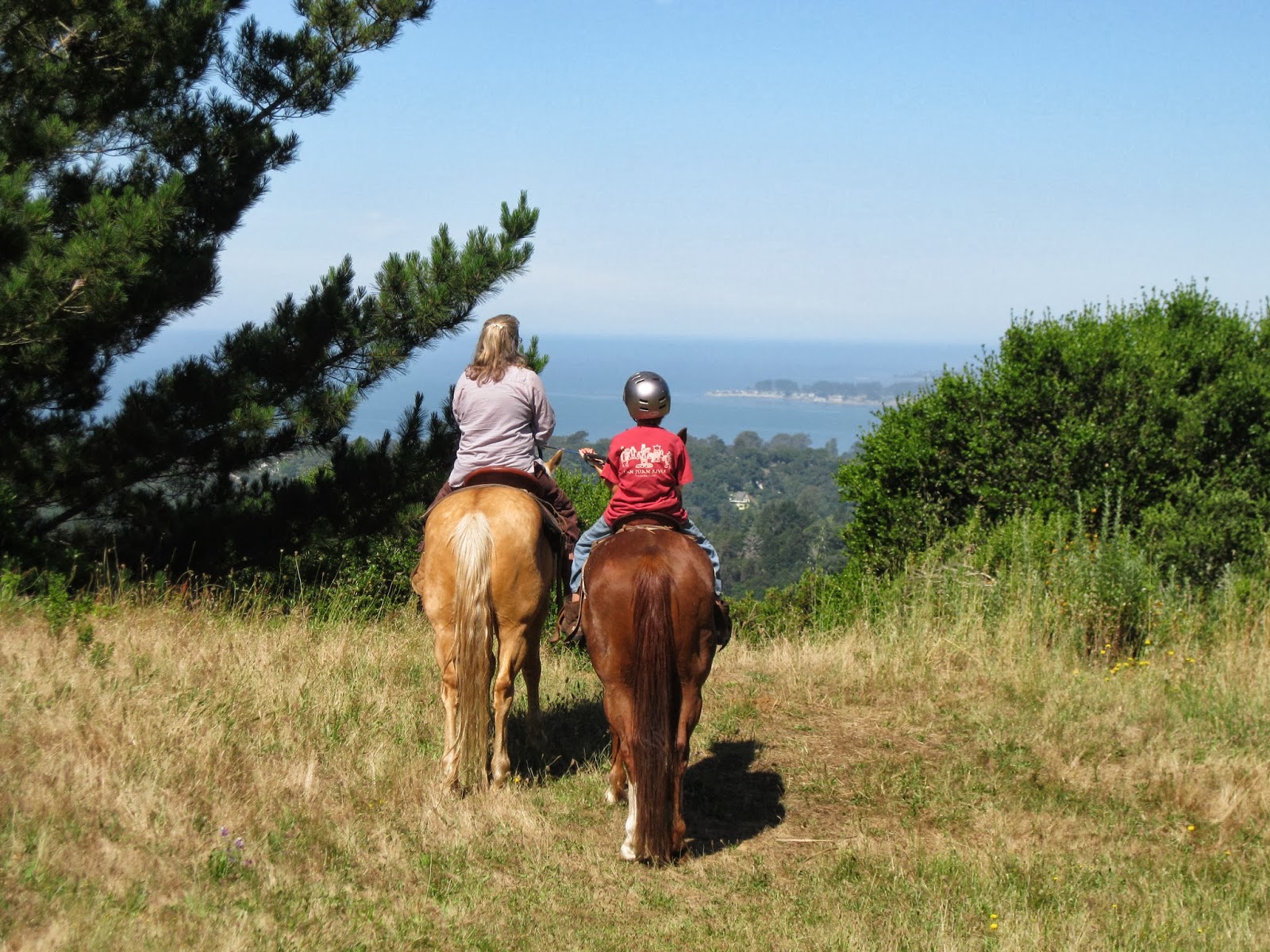
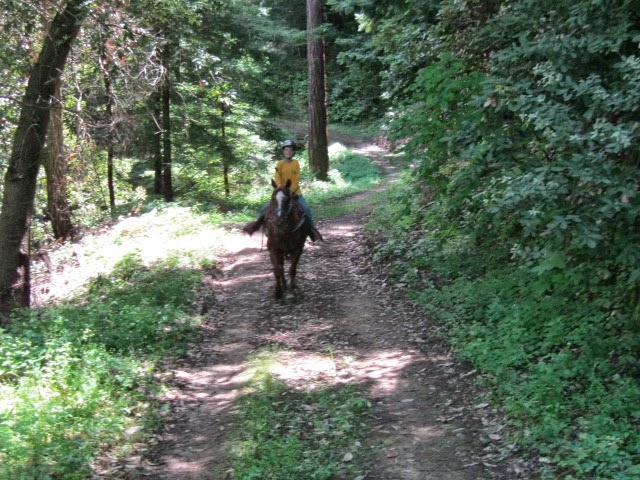
I've written before about my little trail horse, Sunny. Sunny has been a real champ for me, allowing me to lead my son on hundreds of trail rides in the last three years (with my son riding equally bombproof Henry) without one scary moment. In my personal book, that is priceless. I read of others’ accidents and fear issues and my heart really goes out to them. It is so sad to have a lifelong dream of a happy life with horses turn into a nightmare of emotional and physical distress due to injuries and/or fear. I myself have so far dodged this bullet—knocking on wood (literally). I haven’t been hurt yet and I am not fearful when I handle/climb aboard my horse. Not because I am such a good hand. Because I have a reliable, steady horse to ride. I know I have proffered this advice before, but I’m gonna do it one more time in the hopes that it will help somebody. If your primary goal is to enjoy horses without struggling with fear issues or getting hurt, buy a reliable horse in the double digits. A horse with plenty of years of experience in the event you wish to pursue. Not a horse you have to train, or worse yet, retrain. A horse that has been a steady babysitter for his previous rider(s).
I don’t know how many times I have heard someone say, “I don’t need a babysitter.” Very often this person has had far less experience riding/training young horses than I have. I always want to tell them, “I may not need a babysitter, but I WANT one.” I want to have fun on my horses now—I do not want to feel nervous. If you’re not afraid of getting hurt, and don’t mind the normal antics of a young horse or the recalcitrant behavior of a horse with some sizable holes in his training, more power to you. This advice is not meant for you. But if you, like me, are currently more concerned with being safe and worry free while you enjoy riding and handling horses, think long and hard when you choose a horse to work with. A reliable horse in the double digits is a far greater aid to staying safe and anxiety free while riding than any helmet in the world (not that there is anything wrong with wearing a helmet—and, in fact, despite my long and safe helmetless horseback career, I am now planning to go out and buy one, and its mostly thanks to what I have learned from other bloggers. Any suggestions on what brand/sort I should choose?).
(A small aside here—I recently read on another blog the statement that “if you think you own a pair of bombproof horses that will never hurt you, think again. Any horse can hurt you at any time.” This is, of course, true. But its like saying “anything can hurt you at any time. The asteroid could strike the planet at any time.” True, but not very helpful. The woman who made the statement had been hurt handling what she considered to be a gentle horse. From her description, my assessment would be that she wasn’t being careful enough, as the horse hurt her due to a habit that she already knew he had. So here’s the next part of staying safe—always be thoughtful in the way you handle horses. I wince when I read about people playing “games” with horses at liberty, or strolling along beside, or worse yet, behind a loose horse. This is, quite frankly, asking for trouble, no matter how gentle the horse is. When I handle my gentle horses they are caught and haltered and I remain alert. I am careful about the way I catch them and lead them and turn them loose. I groom them and fuss with them when they are under my control and in a safe place, not “at liberty” or God forbid, out in the pasture with other horses. And I am equally thoughtful when I ride them. And these are two very “bombproof” horses. Yes, any horse can hurt you at any time, but if you are careful in how you handle them and use safe practices, and the horse is reliable, it is not very likely. Most of the horsewrecks that I’ve known of involved green horses or horses with a problem habit, or a moment of carelessness on the part of the rider/handler, or following a practice that is just not safe. I understand how people get started doing these things—they are taught these practices by some horse guru or other and they are looking for that elusive “connection” with the horse. But I can tell you for a fact that many of these practices are quite dangerous, and there is a big potential for the horse to hurt you.
Of course, lets face it, people get hurt climbing out of the bathtub or stepping off a curb. Virtually anything can hurt you; life can and will hurt you. As we all know, no one gets out of this alive. However, I will stand by my statement that riding/handling solid horses in the double digits and using careful practices while remaining alert will do the most possible good towards keeping us safe and not fearful when we work with our horses. All right—I’ll get off my soapbox now.)
Anyway, Sunny, my reliable little horse that I just love, has given me hundreds of happy, relaxed trail rides. And here’s the problem. There is a downside to reliable horses in the double digits—and I’m now facing it. The soundness issue.
I’ve mentioned before that Sunny has been off and on slightly gimpy this spring. Well, after last week when we did several trail rides, I went down to feed him one morning and he was lame. Lame in the right front—the foot he’d been slightly off on from time to time. I called the vet.
The vet concurred that it was the right front; the vet agreed with me that there was no sign of a soft tissue injury—no swelling anywhere on the leg. Hoof testers showed some soreness on the sole. No sign of heat or laminitic issues. The left front was fine. The vet wanted to block the foot to see if the lameness was there. I did not want to block the foot.
I have an irrational hatred of nerve blocks because I knew a horse who was put down because he broke his leg trotting with a blocked foot in a vet exam. I know this is a very unlikely thing, but I can’t help it—it bugs me. Also, I’ve been around horses my whole life and I knew Sunny was lame in the foot—just by the way he moved. The hoof tester results confirmed this. (90% of front leg lameness is in the foot, anyway.) So I told the vet I wanted to shoot X-rays of the foot. I thought we might discover some sort of arthritic issue.
But the X-rays were clean. No ringbone, sidebones very clean, no navicular changes, coffin bone looked fine. The vet suggested the horse might be bruised. But we had pared the foot out carefully, and there was no sign of bruising. However we agreed I’d try front shoes and pads and see if it fixed the problem. The pads would be somewhat diagnostic. If the horse went immediately sound, he had sore soles/bruising type issues.
I have been running Sunny barefoot for three and a half years and up until this spring the horse has been quite sound. He has good, big, open feet—he doesn’t chip to speak of. I liked having him barefoot, but I went ahead and put front shoes and pads on him—just to see if it would help him.
It helped some—but it was not an instant cure. He was less lame, but still a little lame. I still felt it was in the foot. I called the vet back and told him to look at the X-rays again. He did. He consulted with another vet. And then he called me back and said he thought, he wasn’t sure, that he could see a tiny little hairline fracture at the very edge of the navicular bone. We discussed my options, IF this was the case. I thought the diagnosis fit the symptoms the horse had shown, so was inclined to believe it. It made sense that the trail riding made him worse. It made sense that the pads would make it better but not fix it. The vet thought leave pads on him, give him a month off, and then reevaluate.
The bright side to all this is that I will be gone for the month of July, so giving Sunny a month off is no problem. The dark side is that I may now be coping with soundness issues in my good little trail horse—for possibly a long time. But I have to say, even if this is so, I would not trade Sunny for any other horse. He has given me a huge gift and if I have to manage his soundness issues in the future, even if I have to retire him, those years of so many lovely rides in which I was never scared, let alone hurt, are totally worth the price of dealing with a sore foot.
Anyway, that’s my little mystery—has anyone else had this particular problem? I’d love to hear about it if so. I have no idea how Sunny injured himself—if this is the answer to his gimpyness. I have never had a horse with this problem. The edges of the navicular bone were very clean, so this is not “navicular disease”. I’m still a bit puzzled about the whole thing and am not sure if we’ve solved the mystery lameness or not. After several days with pads Sunny IS markedly better and trots almost sound in a straight line on level ground. Any thoughts?
And, I will be gone in July—gone from the computer, too, no email or blogs—and back to posting (and riding, I hope) in August. I’ll be participating in the summer book giveaway then—which Jami just announced. Hope you all enjoy it in the meantime.
Happy summer. Cheers--Laura
Wednesday, March 30, 2011
In Praise of Henry
Its sunny and we’re riding again. The horses have had two weeks off due to bad weather. Monday we saddled up and rode in my riding ring—walk trot only because the ground is not perfect yet. The trails will be too wet for some time to come. Both Sunny and Henry felt pretty good—who can blame them. And yet both little guys were well behaved for a fairly sedate session of walk trot work. I am so grateful for them.
So yesterday, as I was thinking about writing a post, I decided I just want to sing Henry’s praises and through him, extol the virtues of buying your child an old, solid horse. So often people opt in favor of the younger, less solid horse, and I know the reasons for this. But the absolutely wonderful, 100% positive experience my son has had with Henry is a good reason to consider that older horse when you’re shopping. And for those who are not the boldest older “re-riders”, this applies to you and me, too. Don’t overlook the “Henry’s” of this world. Let me show you why.

Here is Henry. Henry is a registered QH gelding, of mostly running bloodlines. He is 14.3 hands. I’ve known Henry since he was a young horse. He belonged to a friend of ours, Harold Warkentin, who team roped on Henry until Harold was 80. The photo above shows Henry as a six-year-old at Harold’s place.
Henry was always reliable for Harold and when Harold gave up roping in his 80’s my uncle bought Henry. Henry was 15 at the time. My uncle used him as a practice rope horse and to mount his grandkids on. I watched Henry be perfectly sound and well behaved for an assortment of people for four years. His only vice was being a touch lazy, and I consider that a virtue in a kid’s horse. Henry had smooth gaits and was absolutely reliable, in the pen and outside. When my son’s pony died three and a half years ago (my child had just turned seven years old at the time), I asked if my uncle would sell Henry. Sure he would. For the same five thousand dollars he’d paid for him four years ago.
My friends told me I was nuts. I shouldn’t have to pay five thousand for a nineteen year old horse. And I was perfectly aware that my uncle was cutting a fat hog at my expense. (He’d done this before.) But I knew Henry was the horse I wanted for my son. And he’s been worth every penny.
Since I bought Henry, my son and I have been on hundreds and hundreds of rides together (I kept track the first year—we went on 120 trail/beach rides that year, not counting arena riding). Not once has my kid been hurt or even scared. We have seen many lovely things that will be with us forever. My son has learned to be a confident and effective rider. What price could I put on that?
The photos below show my son riding Henry. They’re not the best pictures, since I took them while riding my own horse, Sunny. But if you look you will see the relaxed, confident demeanor in both horse and child. They are enjoying the world together. And look at what they get to see. I could not have taken my little boy all these places without a horse as solid as Henry.
Henry in riding ring.
Henry on the trail.
Henry at the beach.
Henry is twenty three this spring and still perfectly sound. He colicked when he was twenty and I paid for colic surgery to save his life, but that happens to horses both young and old. The odds are that he doesn’t have ten more years left as a riding horse, as a younger horse might have, but certainly many younger horses have more soundness issues than Henry—who currently has none. He is completely sound and goes barefoot. And if I lost him tomorrow, those last three and a half years are a gift I will value forever.
Henry—twenty three years old.
My son rode Henry yesterday—another pleasant walk/trot session in our riding ring, which still has some muddy spots. Nothing special. Took about twenty minutes. Just what you see in the riding ring photo, which was actually taken last fall. But I cannot think of one single thing that I consider a greater gift than this regular, pleasant, confidence-building interaction my son has with this great old horse. When my son was done he gave his horse a cookie (which we have taught Henry to take politely) and we turned him loose to graze in the ring (which has plenty of grass right now) for an hour. We were all content.
So thank you, Henry, for all you’ve given and are giving us, I will take care of you and love you until the end of your days. And to all of you who are looking for a horse and are offered a chance at a rock solid oldster—do not discount the pure joy available in the reliable ride, free of fear and struggle. Does this look like happiness or what?
Henry and kid—loping in the springtime (last year at this time).
Anybody else have an older riding horse you just love?
Tuesday, September 14, 2010
Teeth Trouble

I don’t know what it’s like where you live, but, over here in Switzerland, the importance of equine dentistry tends to be grossly underestimated. Proper equine dentists are few and far between, and the ones worth their somewhat stiff fees are almost impossible to get hold of unless you have “contacts”.
Of course, if you’re lucky, your horse can go through life with the dental bare necessities. A good vet can generally take care of tooth basics, and chances are you won’t need the services of a fully fledged equine dentist, because your horse won’t develop major problems.
Fingers crossed.
Crossing my fingers hasn’t been enough to keep Kwintus’ pearly whites (!) in mint condition. The day before I took my daughter to university in the UK, we found out that our poor horse needs dental surgery. Pretty major dental surgery as it turns out.
I’ve known Kwintus had a potential major dental problem for about two years now, because the last time the “super dentist” came to visit him he discovered Kwint had a broken tooth very far behind, high up on the left hand side. Back then, the dentist told me there was no point worrying about it too much because it wasn’t infected, and that it was perfectly possible for it to remain that way forever. “But,” he said, “if one day you notice nasal discharge, or that the horse develops dodgy breath, it’s probably because the tooth has suffered further damage and become infected.”
My stomach took a nosedive into the worry zone. “What if that happens?” I wanted to know.
The dentist pulled a face. “The tooth will have to come out, entailing a complicated operation,” he replied. “The tooth is so far back and so badly broken they’ll have to put your horse under full anesthesia, and extract the tooth by breaking through the outside of his jaw. All I can say is that I hope it doesn’t happen. Good luck.”
Well, guess what happened?
Kwintus had suddenly become unhappy with his mouth about a week before I was scheduled to go to England with my daughter. He started drawing circles on the walls of his stable with his front teeth. Steph had never seen anything like it, and neither had I. But there was no nasal discharge and his breath didn’t seem particularly smelly, although maybe I was gradually getting used to a slight stinky whiff. Anyway, we tried over and over to get hold of the “super dentist” who’d treated him two years ago at my previous stables. No answer. No returned calls. Finally, I asked my trainer, Marie-Valentine, whether she knew someone else who might be able to help. Instead, she dialed the “super dentist”’s number, left him a message, and hey presto, ten minutes later she was talking to him. Did I mention contacts help?!
Of course, super dentists have super busy schedules, and it took another four days for the dentist to come and see Kwint, at which point his stable walls were becoming reminiscent of the Lascaux caves in the south of France. The poor horse didn’t know what to do with his mouth anymore. But the dentist arrived with his two Swiss German assistants, got Kwint to open wide, moved in close and nearly keeled over. “Stinken”, he said, briskly shaking his wrist. I didn’t need an English translation.
As it turned out, it wasn’t the broken tooth that was making Kwint draw circles on the walls. His front teeth had just become too long and uncomfortable and needed filing down. But the broken tooth right at the back was a mess; there was gunk all around it, as well as clumps of semi-chewed food that had become lodged in the cavities. Kwint’s tongue was also irritated, with little white spots all over it. When they washed out his mouth with warm water the smell was pretty tenacious.
“It’s not good,” said the dentist, turning to me and shaking his head. “This tooth needs to come out. We’re looking at an operation.”
My poor daughter burst into tears. I held her tight, told her it would be okay, that we’d do what it takes to fix the problem.
“The good news is,” he continued, “that in the past two years there have been major improvements in this particular operation.” He told us there was a dental surgeon in Munich who could extract the tooth without putting the horse out completely, using a far less invasive technique, and who could perform the operation in any good equine clinic in Switzerland. First, however, we’d need to do x-rays to determine the extent of the damage.
To cut a long story short, Stephanie was kind enough to take Kwintus to an equine clinic a week later, while I was settling my daughter into her new life in England. The x-rays revealed that the tooth needs to come out as soon as possible; if it’s not removed it could infect Kwint’s sinuses. Steph phoned the “super dentist” on the way back from the clinic, but he hasn’t got back to her yet. I returned from England on Friday evening and have contacted him too, asking for further details on how to proceed, as well as for a financial inkling of where this dental debacle might be headed. No news so far. My trainer, Marie-Valentine, is currently in Germany, sourcing horses for a client. She gets back tomorrow evening, so hopefully might be able to speak to the dentist on Thursday.
Meanwhile, Kwintus doesn’t seem bothered by his broken tooth, and as the dentist told me to work him as usual, that’s what I’m doing. Of course, as you can imagine, I’m being particularly careful with his mouth.
The thing is, apart from worrying about whether Kwint might be in more pain that he’s letting on, I’m desperate to know what happens next. When will we be able to have Kwintus operated on? What will the recovery time be? And…how much might something like this cost? I get chills just thinking about it.
Have you been through a similar experience, or heard of this sort of problem? I'd be grateful for some feedback.