Anyone who knows me well also knows that I am generally obsessed and often tortured by the need to do the "right thing." For whatever reason, my life has always been driven by a strong moral code (maybe all that guilt from my catholic upbringing) and the imperative that I strive to make honest, moral choices and do what is right especially when it comes to the animals under my guardianship.
As I get older I have found that this creed does not always show you a clear path and what is the "right" thing is not always easy to determine. My current case in point relates to my recent decision to have surgery done on one of my dog's to repair his ACL. I agonized over whether the benefits of the surgery outweighed the the risks and the trauma it would put him through.
Murphy is not your typical dog. He was a very high maintenance rescue that I adopted at 9 months old. He is now 7. When I took Murphy I was pretty much his last chance seeing that I was the 5th home he had had in his 9 months of life. Murphy was very neurotic, insecure, had severe separation anxiety and very little manners. He is either a dobie or rottweiler mix with super high energy and needed a home with land to run and play. It is his exuberance and energy that eventually led to his ACL injury last year. Murphy does everything at full throttle, including playing and running across my property at break neck speed.
It is also this "living large" personality that is making me question whether I have done the right thing and making his recovery a slow and torturous process for both of us. ACL surgery for a dog is very invasive, even more than for its human counterpart, and involves placing screws and plates to stabilize the bones where the ligament no longer functions. In Murphy's case, he had completely ruptured (not that he ever do anything half way) 95% of the ligament which essential left the rest barely attached by a thread and non-functional. The recovery period requires strict confinement for the initial 3 to 4 weeks and then carefully monitored and restricted activity for 2 months after that.
I knew that this would not be easy and that tranquilizers would be the order of the day for a majority of this time, but I had not prepared myself for the reality of how miserable and unhappy Murphy was going to be. Generally they suggest crating the dog, which is not an option for my claustrophobic and nervous boy, so I set up a small 4'x4'x4' - "xpen" type cage in my bedroom with tons of soft bedding. Pretty nice right? Well, not. Murphy is miserable and even as I right this he is whining and crying in the cage which is making me even more unhappy than he is. I wish I could reason with him that it won't be forever and that if he could just chill for a few months that life will get back to normal. Anyone out there that speaks neurotic rescue dog? I am even worried that he is going to compromise the success of the procedure because he won't just lay quietly.
So have I done the right thing? I did not make the decision for surgery lightly not only because of what it would put Murphy through but also because this level of vet specialty does not come cheap. (Nearly $4,500) At the time it seemed that Murphy did not have many other options. I had tried multiple non-invasive therapies like swim rehab, acupuncture, cold laser, and ultraviolet light therapy to name a few. When he became essentially three-legged lame I felt that the only viable option was surgery since I did not want to condemn him to the rest of his life being lame and was not prepared to euthanize him.
But now I am not as sure. Maybe I should have left well enough alone. When he was lame before the surgery he stilled seemed happy as a clam. Horses, at least mine, seem to be easier to deal with inactivity and confinement or at least they hide it better. What do you think? How do you measure "doing the right thing"?
Monday, April 9, 2012

Saturday, April 7, 2012
Scrapbook of Secrets: Mystery Review #2

Last blog post, I reviewed Laura Crum's "Barnstorming," which was lots of fun to read. Today I will review "Scrapbook of Secrets" another fun, mystery read from Mollie Cox Bryan, a writer friend who lives in Virginia. The two books couldn't be different. "Barnstorming" was written by a California, horse gal, and California and horses play huge parts in the mystery. "Scrapbook of Secrets" is written by a Virginia journalist and mom of two girls, and her own life and the fictional middle-class Virginia neighborhood of Cumberland Creek, play huge parts in the mystery. The main characters, Vera and Annie, must decide if the 'suicide' of a fellow-scrapbooker was in fact a suicide or murder. There are many twists and turns along the way!
As I was reading, I was drawn into the characters and town of Cumberland Creek. Because I know Mollie fairly well, it was hard to keep separate her life and the lives of the people in the story. That was part of the charm of the book. The goings-on of families with real problems is at the heart of the mystery. Vera deals with her aging mother, a ballet business, being pregnant and balancing dreams of an old love and the love of her husband. Annie deals with two young boys, a husband who travels and the tough act of juggling family and career.
I don't know anything about scrapbooking, but anyone who crafts will enjoy the aspects of the art. The mystery moves along nicely; this is a "cozy" so violence and psychopaths are kept to a minimum. However, because Cumberland Creek is a "Mayberry" kind of town, the violence that lurks around the corner of the coffee shop can be all too real.
To find more about the book and Mollie, go to her website www.molliecoxbryan.com. "Scrapbook of Secrets" is in paperback and Kindle editions and can easily be found on Amazon and other online bookstores.
Next time it rains or you need a break, enjoy a good mystery!
Wednesday, April 4, 2012
Heart Horses and Breakaway

by Laura Crum
First off, I have to confess, I don’t really know what the term “Heart Horse” means. I hear it used a lot, and I take it to refer to those special horses that come along in one’s life—the ones who own a piece of your heart. When I was young there was an old cowboy saying about how you “only got one special horse” in your lifetime, but I find that isn’t true. I’ve had five “special” horses in my life—and each one brought me some unique gifts. Three of these horses are still with me—two of them I kept until the end of their lives and they are buried here. So today I’d like to talk about my “heart horses” and show you some photos, and maybe hear your stories about yours.
I sometimes wonder how many special horses will come my way in my lifetime. I’m going to be 55 this year, and I’ve owned horses pretty much non-stop since I was 15. That’s forty straight years of horse ownership. I don’t know whether to be proud of this fact or sort of embarrassed. It kind of reminds me of an AA meeting. “My name is Laura and I’m a horseaholic.” Only I’m still doing it. Sort of like going to the AA meeting and then heading out to the bar afterward for a few cocktails. Cause I am still drawn to acquiring more horses—though I know that’s not particularly reasonable. But I am deeply grateful for the five forever horses that have come my way.
I’ve owned many horses in my life, but plenty of them did not really work out for me, and I either sold them or gave them to an appropriate home. When I was young, I longed to have a horse that WOULD work out, would be a forever horse, but I just didn’t know how to make this happen. I eventually found out that you don’t MAKE it happen—you follow where you’re led. Not one of my heart horses came to me in a “normal” fashion. You know, where you set out to buy a horse, try lots of them, pick one you like and buy him, and hey presto, he’s your forever horse. No, every time I tried this approach, I ended up with a horse that did NOT work out.
My first forever horse came along while I was in college. I had previously owned three different horses that I never established much of a bond with; I was busy with school; I had horses I could borrow/ride and had determined I didn’t need to own a horse at that time. But not a month after I sold a little sorrel gelding that I’d trained, I went with a friend to look at some Queensland heeler pups—and saw Burt.
It really was love at first sight. I got out of that truck and ignored the puppies, just walked straight to the corral where this bright bay gelding was trotting up and down. Burt was exactly the horse I’d imagined. My favorite color and size (bright bay, 15.3), and he had the brightest look in his eyes. “Is that your horse?” I asked the guy with the pups.
Turned out he was boarding the horse for a friend—who wanted to sell him. Burt was five years old—and had had thirty days put on him when he was three. That was it. He was said to be gentle—but obviously green as a grass. I’ll make a long story short. A couple of months later Burt was my horse. And he stayed my horse for thirty years. Burt was my first forever horse, or heart horse, I guess. He died at thirty-five years of age—and was trotting about as bright-eyed as ever two hours before we had to put him down (due to a major stroke).
The photo below shows Burt in his prime—he was about seven or eight.

Next came Gunner. Once again, I wasn’t looking for a horse. I owned Burt, and another horse named Ready (who ultimately did not work out). I could not afford a third horse. And I particularly could not afford Gunner.
At the time I was riding for a well known cowhorse trainer as his assistant. I was learning a lot, and I got to ride a lot of really nice horses. I also saw a whole lot of very abusive stuff. Gunner was a just turned three year old for sale, who was placed in my string for me to put some training on him. Gunner had had thirty days when he was two. Like Burt when I bought him, Gunner was green as grass.
But unlike Burt, Gunner was a royally bred cowhorse prospect, and an immensely talented colt. He was also sweet, friendly, and willing. After three months of riding him I was desperately in love with him. I could not stand the thought that he would be bought by some tough cowhorse guy who would torture him to try to win the Snaffle Bit Futurity. No matter that I had no clue how I could afford his expensive purchase price, I took out a loan and bought Gunner. Best choice I ever made. We competed at many events over the years, won some buckles and awards, and shared many good times together. Almost thirty years later, he is still my horse, and he’ll be with me until he dies.
Below you see Gunner and me fifteen years ago—Gunner is seventeen years old and mostly retired—I just used him for light riding at that time.

Next we have Flanigan. Once again, I was not looking for a horse (do you see a pattern here?) Flanigan belonged to my friend, Wally, and he was a horse I did not much care for—until I borrowed him to rope on when I retired Gunner due to arthritic issues. Once again, I fell in love. I have told Flanigan’s story before on this blog, so will simply say that both Wally and I feel he was the best horse either he or I ever rode. I bought a half interest in Flanigan, and took care of/rode this horse until he died—of an inoperable colic at 21 years of age. Below you see us together when Flanigan was in his prime as a rope horse—I’m turning a steer for my friend Sue Crocker on Pistol.

And then there was Plumber. This time I WAS looking for a horse (shock). Gunner and Burt were retired, Flanigan was getting older, and I wanted to buy a young horse to train. But Plumber was not the horse I wanted. I had known this colt since he was born, and when my uncle decided to sell him as an unbroken three-year-old, I took the colt to the round pen to see how he moved. Well…I got Plumber trotting and stepped to his head to turn him—the horse promptly tangled up his front feet and stumbled. I got him going again and again went to turn him—this time he tangled up and fell down. I shook my head in disgust. This was not an athletic colt.
My uncle was of the same opinion—the price on Plumber went lower and lower, as no one bought him. Eventually my uncle made a deal to sell him to the local horse trader. I couldn’t stand it. I had known this sweet little horse since he was born and I knew him to be kind and cooperative. I bought him, determined that he would be my “mind over matter” horse. I told my disbelieving friends that I would prove that a good mind could triumph over a lack of athletic ability.
Plumber was truly a klutz. He disunited if asked to go faster than a lope. He could not make three turns in a row while following a cow without tangling up his feet. It took me five years to get him solid enough at team roping that you could compete on him. But when he was nine years old he was a competitive heel horse. He’s won at least half a dozen saddles, as many buckles, and thousands of dollars in a ten year career. We triumphed; my little mind over matter horse was a winner.
I still have Plumber—he is twenty-three and retired. He nickers every time he sees me.
Below you see Plumber at seventeen years, packing me and my kid.

And now there is Sunny. Once again, I was not looking for a horse. I had quit roping, and the only riding I was doing was with my kid. I had recently bought my little boy a solid horse (Henry) and we were starting to go out on trail rides. I was riding Plumber, recently retired from roping and plenty sound enough for the trail riding I wanted to do. I had no intentions of buying another horse.
But Plumber didn’t like being a trail horse. He’d been a team roping horse for my friend Wally for the last seven or eight years, and hadn’t been out on the trails much during that time, though I’d ridden him outside a bunch when he was younger. For whatever reason (and I suspect he was kind of stiff), Plumber protested when asked to walk downhill and spooked dramatically at every little rustle in the bushes. I was not afraid that he’d dump me, but I didn’t enjoy riding a horse that clearly didn’t want to be there, and I did want to keep my entire focus on my kid, which required that I have a solid bombproof horse of my own.
I had known that Sunny was for sale (in fact I’d tried him and rejected him as a horse for my son—too stubborn), and I knew he was a good trail horse. On a whim, I called the owner and asked if she’d sold him. No, she hadn’t. Many people had tried him, a few had come close to buying him, but he was still with her. Waiting for me, I think.
Anyway, I picked Sunny up on New Year’s Eve 2007, and the rest you know, since I write about him often enough on the blog. Here’s one of my favorite photos of Sunny, taken a couple of years ago. I think it shows the magical quality this little mutt of a horse has—at least for me.

And finally, my sixth book, Breakaway, is now up on Kindle for 99 cents. This is a funny book. People either like it or hate it. I’ve had quite a few folks tell me it is their favorite title in the series. But my then editor told me she never should have agreed to the book, that it didn’t fit my series and was outside the range of “cozy”. It is certainly my darkest book. But my books are pretty light in general, so a dark one isn’t all that creepy compared to lots of what’s out there. In any case, Breakaway deals with depression, which some people relate to, and some people don’t. People who’ve been through depression usually like this book. People who haven’t often find it “depressing.” The crime around which the plot turns is a little weird (OK, very weird)—though it is based on something which I encountered in real life, as are most of the crimes I use to create my mysteries. Anyway, I really like this book, but don’t say I didn’t warn you it’s a little “different.” Here is the link to buy it on Kindle.
If any one would like to talk about their own heart horses—or review Breakaway—I’d love to hear your thoughts. Also, if anyone would like a free copy of my most recent book, “Barnstorming”—a paper copy—email my publisher, Susan Daniel at susan@danielpublishing.com and ask for your free review copy. You must send her your snail mail address, and your only obligation is to post a short review—can be two or three sentences—on Amazon or on your blog.
Tuesday, April 3, 2012
Finding the Right Audience
Since most of you that follow this blog are not only horse people, but also readers - I'd like to talk a little more about my most recent book, The Girl Who Remembered Horses, which released November 2011.

This is a novel set in an imagined future, in which the world has forgotten the ancient bond between horses and humans. One girl, however, dreams of horses, although she has never actually seen one. Here is a short blurb:
Several generations into the future, Sahara travels with her clan in a barren environment where recyclables are bartered for sustenance, and few remember horses or their connection to humans. But Sahara has recurring visions of riding astride on magnificent animals that run like the wind.
With the help of Evan, a young herder from the Gardener's Camp, Sahara discovers a crumbling book containing pictures of humans riding horses and learns her visions are real. Confronting a group of hunters led by hot-headed Dojo, Sahara rescues a wounded horse, but the animal escapes before it can be tamed.
Sahara is labeled a foolish dreamer and almost gives up her quest. Following horse tracks into a remote ravine, she finds wild dogs attacking a dying mare, and must drive them off in order to save the foal. Now she must attempt to raise the young animal, finally convince her clan of the ancient bond between horses and humans, and learn the secret of her true identity.
I talked about the inspiration for this novel in a post I wrote last November - how the story intertwined my research about women's passion for horses and the dire fate of some horses today. If you missed it, you can read that post right here.
I published The Girl Who Remembered Horses with a brand new publisher called Musa Publishing, which at the moment only produces eBooks. (Hopefully they will come out with books in print at some point.) At any rate, although the eBook market is taking off big time, it still limits the audience to those that have an eReader. (Although there is a PDF version available, too, which can be read on a computer.)
The Girl Who Remembered Horses is labeled Young Adult, but at the moment I believe only a handful of young adults have actually read this book. So far, based on the numerous 5-star reviews the books has been gathering on Amazon, it's mostly read by adult women - some of them horse gals and some of them not, although I do have one great review by an 11-year-old girl.
I would love for this book to be more widely read by an even younger group of readers: those ages 9-13, a middle grade or tween audience. But how many kids of this age have access to an eReader? I believe we are in the early stages of reaching that audience with eBooks. As more and more adults buy Kindles and Nooks and tablets, the older versions will eventually get passed down to the younger members of the family, who hopefully will be able to choose their own reading material. Some teachers are beginning to use eReaders in the classroom, and libraries are ordering more and more books their digital collection for readers to borrow. Musa's books, in fact, will soon be available on Overdrive, and available to many libraries across the country.
So in order to increase the readership of this book, I'm giving away three copies in a random drawing. I hope that if you win, you might do one of two things - either write a review somewhere (on Amazon, B&N, Goodreads, or a blog, if you have one) or allow a younger reader to read this book, and let us know what they think.
All you have to do to enter is leave a comment below and tell us how you read eBooks. (On a Nook, a Kindle, a tablet, an iPhone, or even on your computer.)
Help me get this book out to a wider audience. Is it best enjoyed by adult women, young adults, or younger readers? I would love your thoughts - and I appreciate the help!
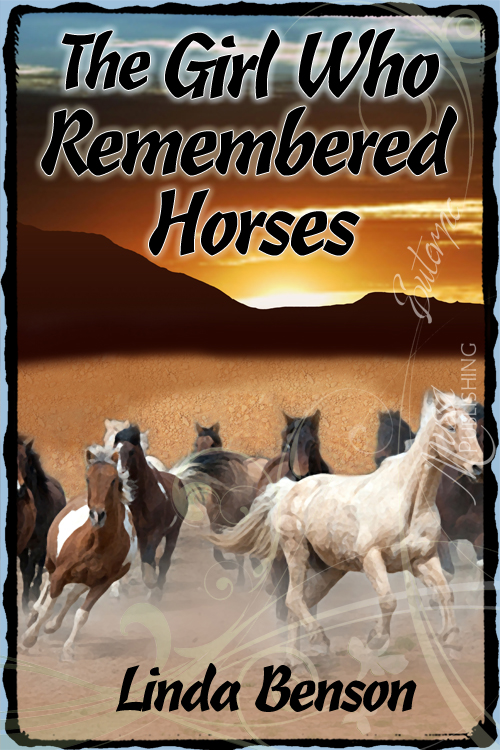
This is a novel set in an imagined future, in which the world has forgotten the ancient bond between horses and humans. One girl, however, dreams of horses, although she has never actually seen one. Here is a short blurb:
Several generations into the future, Sahara travels with her clan in a barren environment where recyclables are bartered for sustenance, and few remember horses or their connection to humans. But Sahara has recurring visions of riding astride on magnificent animals that run like the wind.
With the help of Evan, a young herder from the Gardener's Camp, Sahara discovers a crumbling book containing pictures of humans riding horses and learns her visions are real. Confronting a group of hunters led by hot-headed Dojo, Sahara rescues a wounded horse, but the animal escapes before it can be tamed.
Sahara is labeled a foolish dreamer and almost gives up her quest. Following horse tracks into a remote ravine, she finds wild dogs attacking a dying mare, and must drive them off in order to save the foal. Now she must attempt to raise the young animal, finally convince her clan of the ancient bond between horses and humans, and learn the secret of her true identity.
I talked about the inspiration for this novel in a post I wrote last November - how the story intertwined my research about women's passion for horses and the dire fate of some horses today. If you missed it, you can read that post right here.
I published The Girl Who Remembered Horses with a brand new publisher called Musa Publishing, which at the moment only produces eBooks. (Hopefully they will come out with books in print at some point.) At any rate, although the eBook market is taking off big time, it still limits the audience to those that have an eReader. (Although there is a PDF version available, too, which can be read on a computer.)
The Girl Who Remembered Horses is labeled Young Adult, but at the moment I believe only a handful of young adults have actually read this book. So far, based on the numerous 5-star reviews the books has been gathering on Amazon, it's mostly read by adult women - some of them horse gals and some of them not, although I do have one great review by an 11-year-old girl.
I would love for this book to be more widely read by an even younger group of readers: those ages 9-13, a middle grade or tween audience. But how many kids of this age have access to an eReader? I believe we are in the early stages of reaching that audience with eBooks. As more and more adults buy Kindles and Nooks and tablets, the older versions will eventually get passed down to the younger members of the family, who hopefully will be able to choose their own reading material. Some teachers are beginning to use eReaders in the classroom, and libraries are ordering more and more books their digital collection for readers to borrow. Musa's books, in fact, will soon be available on Overdrive, and available to many libraries across the country.
So in order to increase the readership of this book, I'm giving away three copies in a random drawing. I hope that if you win, you might do one of two things - either write a review somewhere (on Amazon, B&N, Goodreads, or a blog, if you have one) or allow a younger reader to read this book, and let us know what they think.
All you have to do to enter is leave a comment below and tell us how you read eBooks. (On a Nook, a Kindle, a tablet, an iPhone, or even on your computer.)
Help me get this book out to a wider audience. Is it best enjoyed by adult women, young adults, or younger readers? I would love your thoughts - and I appreciate the help!
- Leave a comment below to enter.
- 3 Copies Available
- Contest open through midnight, PST, April 15th, 2012.
Sunday, April 1, 2012
The Weigh-in

Over the past several months, I discovered a very large downside to not riding on a regular basis (actually not riding at all would be more like it). I am way out of shape.
Of course, I realized riding was good exercise. What did surprise me was how many parts of my body are affected by not riding horses. While I haven't actually put on weight, I am definitely more out of shape in ways I didn't predict. My usual 30-minute walk at lunch leaves me huffing. Mowing the lawn hurts my arms. Walking up four flights of stairs to my office is next to impossible because my leg strength is gone. Even gardening is a chore. Okay, we could chalk it up to getting older, but riding horses did keep my body younger than most women's bodies of my age group.
Something needs to change. No, I don't plan on buying another horse anytime soon, if ever. Nor do I plan on leasing one. A new horse is not part of my current or future plans. Paying off bills and carving out time to write are along with working on my property.
When a writer friend of mine, Lucy Monroe, invited me to be a team captain for her fitness challenge, I jumped at the chance. I'm competitive so what could be better than almost three months of competing with others to lose weight and get in shape. Even better is the added pressure of heading a team (I've always been better under pressure) and being a good example. Also, the team captains have a side bet in which the winning team gets to donate the proceeds to the charity of their choice.
So today is the first day of Lucy Monroe's Fitness Challenge and what I hope will be three months of eating better and exercising more. We're using MyFitnessPal.com as our fitness/weight tracker. If you haven't used this tool before and are interested in losing weight, I strongly recommend it. It's free, and it's pretty simple to use. There are also apps for iPhones and Androids. What I love is that it tells you how much you need to eat to lose so many pounds in so many weeks. I find that extra incentive quite helpful.
Wish me luck as I embark on yet another attempt to lose weight. I'm hoping the team concept is what I need to finally stick with it. If you'd like to join us, I don't think it's too late to sign up either. Lucy is offering some nice prizes, especially if you're a fan of romance novels.
I'll keep you posted on my progress.
Friday, March 30, 2012
Animal Voices
I have this funny, I guess sort of strange thing I do with my animals (all of them). I'm kind of embarrassed to admit this, but honestly I was trying to come up with a few paragraphs for the blog today since I hadn't gotten to it for some time, and I thought about this thing that I do. I talk to my animals--horses, dogs, and cat and I realize that isn't so strange because I know a lot of people talk to their animals. However, I sort of take it once step further and have my animals talk back to me. You're probably wondering what the heck I mean by that, or maybe you're thinking this woman is off her rocker. A few people might think that, but I'm okay with that. Really I am.
Anyway, back to the part where the animals talk back to me. Let's say I'm talking to my dog Java who is gigantic Rhodesian Ridgeback (not your typical Rhodie) and although Java is gorgeous, he appears to be a bit lacking in brain cells. At the very least he knows how to play dumb quite well. So, when I ask Java a question like, "How was your day?" "He" answers me back with "his" voice, which happens to be rather low and quite dumb sounding (think Scooby Doo here). I wish I could do "his" voice for you here, but I can't and honestly, I probably wouldn't because you would then seriously think I'm off my rocker. Mylee who is our pound puppy has a much higher and far more intelligent sounding "voice," and her answers tend to throw Java under the bus on a regular basis--calling him not so nice names. it's really kind of entertaining when I have an entire conversation going on between the three of us. Then, there is Daisy (our two-year-old doberman). Daisy has a scratchy high voice and is quite needy. She is constantly saying things like, "Love me, Mom! Aren't I pretty? Aren't I great?"
And, now (yes--I am crazy) we have a new puppy in the house named Ella (I call her Lala). Lala has a tiny baby girl voice and she is constantly insisting. "No, no, no--I did not pee pee. That was Daisy. I promise, cross my heart."
As far as the horses go, well, Mister Monty is our little Gypsy Vanner guy and you can guess that he has an Irish lilt that sometimes sounds like a cross between a British/Spanish accent (I don't quite have the Irish thing down yet, even though my heritage dictates a lot of Irish blood in me. His answers to my questions are always highly intelligent. My mare Krissy, who I also call Princess (well, you can only guess what she might sound like and what a discussion with her might be. Basically she always wants to know where her "damn" cookies are). And now I have my 3 girls--Bronte, Mia, and Kaia and they have very young, sweet voices and they all answer their "mommy," in just the right tone. Yeah right. Each one has their own, strong personality just like the human teenagers in my life.
I'm not sure why I do this with my animals--maybe it's for pure entertainment, maybe it's to drive my kids crazy (which it does seem to have that effect, however, I have caught each one of them trying to hide their laughter at this little game I play) or maybe I am off my rocker. It doesn't matter why I do this, I just do.
I'm curious though, does anyone else out there not only talk to their animals, but do your animals talk back, or at least do you talk back for them, saying what you think they might be saying back to you? I'd love to find out that I am not the only crazy animal person around.
Cheers,
Michele
Thursday, March 29, 2012
A Lesson in Loading
I had a loading lesson with an amazing man last week. His name is Antoine Cloux, he rides Western, and he’s famous in my area for getting horses to load easily.
I’ve never really had any massive problems loading Qrac. He’s played me up a couple of times, but never for too long. Nevertheless, I’ve never felt totally confident about his attitude towards loading. Unlike his stable-mate Woody, who belongs to my friend Heike, you can’t just lead Qrac up to the trailer, tell him “forwards”, throw the rope over his neck and have him walk in all by himself. Same with unloading; Heike just unties Woody at the front, then calmly walks to the back of the trailer, unhooks the metal bar, and tells him to “come on”. Woody gently backs down the ramp, Heike picks up his lead rope and that’s the end of that. There’s no drama, no rushing around looking for someone to help her. Woody’s cooperative attitude makes trailering far more relaxed.
I want relaxed trailering experiences. I want Qrac to load and unload like Woody. So I asked Heike how she’d taught her horse to load so easily. She shrugged. “Oh, I just put food in there,” she replied. “Now he loves it!”
I’ve lured Qrac into the trailer with food many times, the most nerve-wracking time being when I hot-footed it out of the crappy, leaky-roofed dump of a stables I’d made the mistake of moving into last November (I wrote about it on this blog; Qrac and I lasted all of two days there). Being a little embarrassed about leaving so soon, I wanted to make a low-key exit. By some miracle I managed to align my car onto the trailer hook without getting in and out of the car a gazillion times, then, armed with a giant bag of carrots, enticed Qrac to follow me up the ramp singlehandedly. But my heart was in my mouth as I slipped out of the side door and rushed round to the back of the van to lock him in, certain he’d shoot back out again and gallop around, creating stallion mayhem. Thankfully he didn’t, and minutes later we slunk away, him presumably munching away, me sweating profusely!
There have been times, however, when even a bag of carrots hasn’t encouraged Qrac to bound enthusiastically into the trailer, when he’s danced around me and my hastily gathered trailer-loading assistants, eyeing us nanny-nanny-poo-poo style. One time we had to resort to using lunges to get him in (ok, so we hadn’t given him much time, but I was in a hurry, and couldn’t hang around proffering fruit and pretty-pleasing), an experience I didn’t enjoy. Also, having seen certain individuals at my stables shooing their horses into vans with whips and broomsticks, I didn’t want to find myself in the uncomfortable position of having them offer to help me get my uncooperative horse into my van! If Woody could learn to load so coolly, then so could Qrac.
Of course, Woody is far more placid than Qrac. Not that Qrac is a hot-headed fire-cracker. In his stable and in the grooming area, he comes across as a total dope-head, usually standing with his head low and his eyes half-closed. It’s when I get on him that he switches gears, striding out purposefully. Also, a new environment, or anything out of the ordinary tends to worry him, and Qrac is very good at whirlwind spins to the left, especially on outside rides. He’s hard to read, temperament wise, as he can go from super-cool to super-hot and back to super-cool again within seconds. Woody on the other hand doesn’t seem to get flustered about anything. I mulled things over for a while, wondering whether I could single-handedly teach Qrac to load consistently without getting myself into a giant pickle and making his loading ethic worse.
It didn’t take long for me to decide to get professional help. My trainer had told about Antoine Cloux’s remarkable track record with recalcitrant loaders, so I phoned him up and made an appointment.
Antoine met me at the stables last Thursday. He put Qrac in a Parelli halter (I think that’s what they’re called) attached to a long rope, and briefly explained his technique. Basically, the horse has to be motivated to go into the trailer, he must consider the trailer as a refuge from anything unpleasant happening outside. Of course, typically, Qrac followed Antoine into the trailer like a puppy dog from the word go! However, he wasn’t particularly motivated to stay inside the trailer despite the carrots and random other treats on offer, and soon began to try to back out, whereupon Antoine applied a steady pressure on the rope, holding it quite high, which Qrac clearly found slightly uncomfortable. As soon as Qrac took a step forwards, Antoine immediately relaxed the pressure. Thus began a “conversation” of backwards and forwards between Antoine and my horse. When Qrac insisted that he really preferred to be outside the van, Antoine told him that was perfectly fine, but that he’d soon find out that life was far more pleasant inside.
Antoine never did anything hectic or violent. He never got loud or bad-tempered. All he did was wave the rope a bit, urging Qrac to move around him in a circle, making him cross his hind legs. Less than a minute later, he asked Qrac to follow him back into the van. Qrac went in happily, staying there a little longer this time before deciding to back out again, whereupon Antoine repeated the entire process. Before the hour was up, Qrac was going in and out of the trailer by himself, and once inside, staying there quite happily.
Antoine told me to never let my horse stop behind the trailer, to always lead him up to the van from a good distance away at a determined pace and to not turn to look at him (I tend to start off at a determined pace, then start worrying about whether or not my horse is actually going to follow me in, turn to try and determine what frame of mind he’s in, then find myself floundering at the base of the ramp with a prancing horse in one hand and a carrot in the other). I must believe he’s going to go in there without making a fuss.
Before Antoine left, he made me have to go. I took a deep breath, then set off at a decided pace only to hesitate for a nano-second at the base of ramp simply because I’d misjudged the trajectory and realised that Qrac was headed for the wrong, far too narrow side of the trailer (we’d opened the middle partition so it was wider for him). Qrac immediately balked, danced around the side of the ramp, whereupon I was told to lead him away from the van and start all over again. “Don’t hesitate,” Antoine encouraged. “Just go for it.”
This time I got it right. I’m not sure Qrac would have stayed in the van alone while I exited via the side-door and locked the bar under his tail, but the hour was up and it was time for Antoine to go.
I took Qrac to the farrier that afternoon. He loaded easily, but I doubt I could have thrown the rope over his neck and told him to go into the van by himself, so I’ve asked Antoine to come back in a couple of weeks for another session. I’ve also asked him whether he might be able to help me with Qrac’s annoying habit of suddenly spinning up and sideways on trail rides. He’s been doing it more often recently, and I don’t like it at all, especially when I can't see anything spooky in sight. Antoine seemed quite confident he could help me with this by provoking the up and sideways spinning in the arena, so we’ll see. I hope it helps.
Do you have any special tips for getting horses to load easily? How about for horses that suddenly spin sideways on trail rides? Antoine told me I needed to concentrate on his getting him to keep moving his hind legs, which makes perfect sense, but depending on the circumstances is easier said than done! I’d love you to share your tips and experiences with me. Thanks for listening.
Subscribe to:
Posts (Atom)