Sunday, April 15, 2012

Flicka DVD Giveaway

We have a special treat for our readers today. We have two DVD copies of "Flicka" to give away, courtesy of 20th Century Fox Home Entertainment. We were contacted by their publicity group earlier this week about this offer. We agreed it was something our readers would be interested in winning.

Clint Black (personally one of my favorite country singers) is the star of this movie.

To enter, just make a comment to this post. We'll choose the winners by a random drawing of all the names. The last day to enter will be Wednesday, April 18, 2012.


From Country Stage to Silver Screen
Arriving on Blu-ray and DVD May 1

Exclusively at Walmart, Sam’s Club® and Walmart.com

When Toby (Clint Black) takes on a job at a stable with Flicka in tow, the owner’s teenage daughter Kelly (Kacey Rohl), quickly bonds with the wild horse. A budding equestrian rider, she hopes to break Flicka for an upcoming competition, despite her mother’s (Lisa Hartman Black) disapproval. With the competition approaching, a rival trainer stealing business, and a growing fear they may be forced to sell the stable, Toby steps in to turn things around for Kelly and her mother.

Make a comment below to win a copy of Flicka: Country Pride on DVD!
 

Wednesday, April 11, 2012

Geting from Green to Broke--and Hayburner


by Laura Crum

Back in March I did a post titled “Finding A Been-There-Done-That Broke Horse”. Subsequent to this someone emailed me with the question, “But what if you have a green horse that you love and don’t want to sell, and you want to put in the time to turn that horse into a broke horse. How do you do it? How do you get from here to there?”

That is a really good question. There is, of course, no simple one-size-fits-all answer. But I studied on the question for awhile, to see if I could come up with something helpful. And thus today’s post was born.

First of all, I want to clarify a couple of things. A green horse is very different from a spoiled horse or a problem horse. For the purposes of this post, I’m gonna speak from the perspective of having a green horse—a horse who hasn’t had a lot of training—rather than a horse that has some bad habits that he’s learned and is attached to. Retraining a problem horse is a lot harder than training a green horse—in general. Its not that you can’t (sometimes) cure the horse of the problem behavior such that he acts right. Its just that the horse will tend to revert to said problem behavior when stressed, or when he thinks he can get away with it. So today we’re talking about green horses.

Green horses will have problem behaviors, of course. It sort of goes with the territory. But a green horse behaves as he does because he doesn’t know what is wanted, and hasn’t been convinced he needs to do what is wanted at all times. Green horses are (or should be) young. If a horse is a green horse and he is older than eight (or so), then you have a problem horse. Because horses tend to get a bit set in their ways after eight, and it is harder to train them. So, for the purposes of this post, let us say you have a green horse between four and eight (I don’t believe in riding three year olds hard, and I’d be thoughtful what I did with a four year old). How do you train your green horse such that he becomes a reliable, broke horse?

There are quite a few variables here. Some horses are gonna be a lot harder to train than others. That’s just how it goes. And there are tons of different training methods. So I’m not going to talk about individual personality types, and I’m not going to talk about specific training methods (much). I’m going to try to find some approaches that work across the whole spectrum.

All right, I do have to say that in my experience some training methods work better than others. I have never seen a horse that came out of a natural horsemanship/Parelli-esque program that impressed me as a well broke horse. But maybe I just haven’t seen enough of them. On the other hand, I have seen a good many horses come out of traditional horse training programs that sure could execute—but they were treated so harshly that they were physically crippled and/or emotionally blown up. This did not impress me either. So I am going to simply say that you can pick your own training approach and/or specific trainer—just make sure that what you do is consistent, not abusive, and keeps you in charge. And I’ll give you three basic principles to follow that I think will turn almost any horse from a green horse to a broke horse.

The first one you will have heard before. But it is absolutely true and you won’t succeed without it. Wet saddle blankets. You’ve got to ride your green horse often and hard enough that he gets tired. The saddle blankets must be wet. You cannot train a green horse in twenty minute increments of walk/trot work (in hand or on his back), where the horse doesn’t even crack much of a sweat. You will simply frustrate each other.

A green horse needs to be worked five or so days a week for at least an hour and he must get sweaty and tired enough that he doesn’t carry around a lot of excess energy. No, turn out will not do the trick. Wet saddle blankets are essential if the horse is to become a reliably broke horse. If you are willing to do longer rides (and the horse is old enough and strong enough for this), you may not have to ride five days a week. Young ranch horses would get maybe two days a week. But they went all day a lot of the time (with breaks).

Wet saddle blankets means you are RIDING the horse. I don’t fault anyone for doing lunging or round penning if they are afraid a horse might buck them off or run off with them, but as soon as you can safely get on, get on and ride. You will not achieve the goal by playing games of any sort (including lunging and round penning) on the ground. You need to ride the horse. If you are afraid to ride the horse, send the horse to a trainer you have confidence in and make sure they ride the horse. Its perfectly OK to get your wet saddle blankets with someone else in the saddle. But green horses need lots of miles with a rider to become broke horses and you must make sure the horse gets those miles.

Now I could say a lot here about the difference between miles with a competent rider versus miles with a dude, but you know what? In my view, the miles are the most important. I have known quite a few horses trained by fairly ignorant people who put in the time and miles—and the horses made good, reliable broke horses. Maybe not well trained horses, but broke horses (see my March post “Finding a Been-There-Done-That Broke Horse” for the difference between well-trained and broke). So on to the next principle.

Give the horse a job. The absolute worst thing you can do with a green horse is to hold no more of a goal for him than he let you walk/trot around the ring on him, with maybe the occasional lope down the long side. No. If you don’t want to do anything more “exciting” than this, then take up beginning level dressage, or western pleasure, or reining. You can still stay in the ring and walk/trot, a little lope, but you have a defined job you are teaching the horse to do, and you make him work at it until he gets it right.

Trail riding can be his job. Jumping, endurance, cutting, whatever you like. But it needs to be something where you can challenge the horse a little and ask him to work pretty hard at learning and executing his job. You need to be focused on getting the job done, not whether little Fluffy is in just the right mood today, which is what happens when people dink around with horses endlessly with no real goal in mind other than the horse do what they tell him. Yes, he must do what you tell him, but it goes much better if it is for a purpose—part of a job he must learn and do. Remember—you dink around, you make a dink (a quote from cutting horse trainer Leon Harrel).

It is your “we need to get this job done” attitude that will do the most to turn a green horse into a broke horse. In essence, you ignore or correct his little shenanigans as needed, but you keep your focus on getting the job done. And pretty soon the horse will, too.

And finally, as in most things, persistence is key. You have to persist. It won’t happen overnight. You’ll have good days and bad days, and if you ride green horses, be prepared for some drama. Because you’re likely to get some. In fact, you’re almost sure to get some drama of some kind. And just when you think the horse is done being a drama queen, you’ll have another “drama day”. You just have to persist. More wet saddle blankets, keep your focus on getting the job done. Correct, reprimand, ignore, show what is wanted, encourage and reward…all in turn as seems needed.

If you become afraid of the horse, you need to get help. Fear is not a good position to come from, though I think most of us get a little anxious at times when working with green horses. But you need to be clear that you are up to the task, anxious or not, or you shouldn’t be doing it. You can send your green horse to a trainer (no shame in that) and persist that way, but you must persist in some form or other in a steady way—and again, it takes awhile. Realistically, if you have a six year old green horse, expect him to be eight before he is a solid broke horse. And in those ensuing two years, lots of wet saddle blankets as he learns to do his job reliably. Be sure that you are prepared for the occasional exciting moment and are willing to forgive and get on with the job. This is what training a green horse amounts to.

OK—these are the best insights I could come up with. I can think of a few other good tricks that are helpful—the tie-up trick being one of them, but the last time I posted on that, I got a certain amount of flack from folks who thought I was cruel, so we’ll just leave that out for today. If anybody else has a contribution on this subject, chime in. I’m sure there are many things I’ve forgotten that might be helpful to discuss.

And on a somewhat unrelated note, my seventh novel, Hayburner, is now up on Kindle for 99 cents. Its not totally unrelated, because the “background” horse theme in this book (all my books have a slightly different background horse theme) is breaking a colt. I’ve broken/trained dozens of colts in my life, and have tried to weave a few of the insights I’ve learned into this story. Hayburner is overall a good read (says I), but there is one thing that really bugged me while I was going over the ms to get it ready for Kindle. And I want to know if anybody else has this problem. I hated reading the sex scenes.

Don’t get me wrong, its not that I don’t like sex and I can enjoy a well-written erotic scene—written by someone else. But I absolutely HATE writing these scenes, and I find I hate re-reading them even more. Since mine is a more or less classic mystery series, sexy scenes are not obligatory (thank God), though a touch of romance pretty much is. But I know from my own reading that one gets a little bored of the sleuth who continually teases but won’t get in the sack. So in this book, I decided that Gail was going to get some action. Well…its not badly written and all that—I seem to have improved somewhat as a writer in these later books—but I cringe when I read the bedroom scenes. Not that they are so explicit or anything. From a romance writer’s viewpoint they are dreadfully tame, I’m sure. So here’s my question. Do the rest of you, especially the romance writers, have a hard time reading your own bedroom scenes? Or is it just me?

Anyway, Hayburner is a good story (bedroom scenes and all) and it is now available for 99 cents, if you read on Kindle. Here is the link to buy it. And here is a brief synopsis.

HAYBURNER: Veterinarian Gail McCarthy is called out to treat injured horses when the biggest boarding stable in Santa Cruz County catches fire. When a second barn fire occurs nearby, the California horse vet finds herself in the middle of the search to catch an arsonist—before any more horses or people die.


Monday, April 9, 2012

Doing the right thing.

Anyone who knows me well also knows that I am generally obsessed and often tortured by the need to do the "right thing." For whatever reason, my life has always been driven by a strong moral code (maybe all that guilt from my catholic upbringing) and the imperative that I strive to make honest, moral choices and do what is right especially when it comes to the animals under my guardianship.

As I get older I have found that this creed does not always show you a clear path and what is the "right" thing is not always easy to determine. My current case in point relates to my recent decision to have surgery done on one of my dog's to repair his ACL. I agonized over whether the benefits of the surgery outweighed the the risks and the trauma it would put him through.

Murphy is not your typical dog. He was a very high maintenance rescue that I adopted at 9 months old. He is now 7. When I took Murphy I was pretty much his last chance seeing that I was the 5th home he had had in his 9 months of life. Murphy was very neurotic, insecure, had severe separation anxiety and very little manners. He is either a dobie or rottweiler mix with super high energy and needed a home with land to run and play. It is his exuberance and energy that eventually led to his ACL injury last year. Murphy does everything at full throttle, including playing and running across my property at break neck speed.

It is also this "living large" personality that is making me question whether I have done the right thing and making his recovery a slow and torturous process for both of us. ACL surgery for a dog is very invasive, even more than for its human counterpart, and involves placing screws and plates to stabilize the bones where the ligament no longer functions. In Murphy's case, he had completely ruptured (not that he ever do anything half way) 95% of the ligament which essential left the rest barely attached by a thread and non-functional. The recovery period requires strict confinement for the initial 3 to 4 weeks and then carefully monitored and restricted activity for 2 months after that.

I knew that this would not be easy and that tranquilizers would be the order of the day for a majority of this time, but I had not prepared myself for the reality of how miserable and unhappy Murphy was going to be. Generally they suggest crating the dog, which is not an option for my claustrophobic and nervous boy, so I set up a small 4'x4'x4' - "xpen" type cage in my bedroom with tons of soft bedding. Pretty nice right? Well, not. Murphy is miserable and even as I right this he is whining and crying in the cage which is making me even more unhappy than he is. I wish I could reason with him that it won't be forever and that if he could just chill for a few months that life will get back to normal. Anyone out there that speaks neurotic rescue dog? I am even worried that he is going to compromise the success of the procedure because he won't just lay quietly.

So have I done the right thing? I did not make the decision for surgery lightly not only because of what it would put Murphy through but also because this level of vet specialty does not come cheap. (Nearly $4,500) At the time it seemed that Murphy did not have many other options. I had tried multiple non-invasive therapies like swim rehab, acupuncture, cold laser, and ultraviolet light therapy to name a few. When he became essentially three-legged lame I felt that the only viable option was surgery since I did not want to condemn him to the rest of his life being lame and was not prepared to euthanize him.

But now I am not as sure. Maybe I should have left well enough alone. When he was lame before the surgery he stilled seemed happy as a clam. Horses, at least mine, seem to be easier to deal with inactivity and confinement or at least they hide it better. What do you think? How do you measure "doing the right thing"?

Saturday, April 7, 2012

Scrapbook of Secrets: Mystery Review #2


Last blog post, I reviewed Laura Crum's "Barnstorming," which was lots of fun to read. Today I will review "Scrapbook of Secrets" another fun, mystery read from Mollie Cox Bryan, a writer friend who lives in Virginia. The two books couldn't be different. "Barnstorming" was written by a California, horse gal, and California and horses play huge parts in the mystery. "Scrapbook of Secrets" is written by a Virginia journalist and mom of two girls, and her own life and the fictional middle-class Virginia neighborhood of Cumberland Creek, play huge parts in the mystery. The main characters, Vera and Annie, must decide if the 'suicide' of a fellow-scrapbooker was in fact a suicide or murder. There are many twists and turns along the way!

As I was reading, I was drawn into the characters and town of Cumberland Creek. Because I know Mollie fairly well, it was hard to keep separate her life and the lives of the people in the story. That was part of the charm of the book. The goings-on of families with real problems is at the heart of the mystery. Vera deals with her aging mother, a ballet business, being pregnant and balancing dreams of an old love and the love of her husband. Annie deals with two young boys, a husband who travels and the tough act of juggling family and career.

I don't know anything about scrapbooking, but anyone who crafts will enjoy the aspects of the art. The mystery moves along nicely; this is a "cozy" so violence and psychopaths are kept to a minimum. However, because Cumberland Creek is a "Mayberry" kind of town, the violence that lurks around the corner of the coffee shop can be all too real.

To find more about the book and Mollie, go to her website www.molliecoxbryan.com. "Scrapbook of Secrets" is in paperback and Kindle editions and can easily be found on Amazon and other online bookstores.
Next time it rains or you need a break, enjoy a good mystery!

Wednesday, April 4, 2012

Heart Horses and Breakaway


by Laura Crum

First off, I have to confess, I don’t really know what the term “Heart Horse” means. I hear it used a lot, and I take it to refer to those special horses that come along in one’s life—the ones who own a piece of your heart. When I was young there was an old cowboy saying about how you “only got one special horse” in your lifetime, but I find that isn’t true. I’ve had five “special” horses in my life—and each one brought me some unique gifts. Three of these horses are still with me—two of them I kept until the end of their lives and they are buried here. So today I’d like to talk about my “heart horses” and show you some photos, and maybe hear your stories about yours.

I sometimes wonder how many special horses will come my way in my lifetime. I’m going to be 55 this year, and I’ve owned horses pretty much non-stop since I was 15. That’s forty straight years of horse ownership. I don’t know whether to be proud of this fact or sort of embarrassed. It kind of reminds me of an AA meeting. “My name is Laura and I’m a horseaholic.” Only I’m still doing it. Sort of like going to the AA meeting and then heading out to the bar afterward for a few cocktails. Cause I am still drawn to acquiring more horses—though I know that’s not particularly reasonable. But I am deeply grateful for the five forever horses that have come my way.

I’ve owned many horses in my life, but plenty of them did not really work out for me, and I either sold them or gave them to an appropriate home. When I was young, I longed to have a horse that WOULD work out, would be a forever horse, but I just didn’t know how to make this happen. I eventually found out that you don’t MAKE it happen—you follow where you’re led. Not one of my heart horses came to me in a “normal” fashion. You know, where you set out to buy a horse, try lots of them, pick one you like and buy him, and hey presto, he’s your forever horse. No, every time I tried this approach, I ended up with a horse that did NOT work out.

My first forever horse came along while I was in college. I had previously owned three different horses that I never established much of a bond with; I was busy with school; I had horses I could borrow/ride and had determined I didn’t need to own a horse at that time. But not a month after I sold a little sorrel gelding that I’d trained, I went with a friend to look at some Queensland heeler pups—and saw Burt.

It really was love at first sight. I got out of that truck and ignored the puppies, just walked straight to the corral where this bright bay gelding was trotting up and down. Burt was exactly the horse I’d imagined. My favorite color and size (bright bay, 15.3), and he had the brightest look in his eyes. “Is that your horse?” I asked the guy with the pups.

Turned out he was boarding the horse for a friend—who wanted to sell him. Burt was five years old—and had had thirty days put on him when he was three. That was it. He was said to be gentle—but obviously green as a grass. I’ll make a long story short. A couple of months later Burt was my horse. And he stayed my horse for thirty years. Burt was my first forever horse, or heart horse, I guess. He died at thirty-five years of age—and was trotting about as bright-eyed as ever two hours before we had to put him down (due to a major stroke).

The photo below shows Burt in his prime—he was about seven or eight.

Next came Gunner. Once again, I wasn’t looking for a horse. I owned Burt, and another horse named Ready (who ultimately did not work out). I could not afford a third horse. And I particularly could not afford Gunner.

At the time I was riding for a well known cowhorse trainer as his assistant. I was learning a lot, and I got to ride a lot of really nice horses. I also saw a whole lot of very abusive stuff. Gunner was a just turned three year old for sale, who was placed in my string for me to put some training on him. Gunner had had thirty days when he was two. Like Burt when I bought him, Gunner was green as grass.

But unlike Burt, Gunner was a royally bred cowhorse prospect, and an immensely talented colt. He was also sweet, friendly, and willing. After three months of riding him I was desperately in love with him. I could not stand the thought that he would be bought by some tough cowhorse guy who would torture him to try to win the Snaffle Bit Futurity. No matter that I had no clue how I could afford his expensive purchase price, I took out a loan and bought Gunner. Best choice I ever made. We competed at many events over the years, won some buckles and awards, and shared many good times together. Almost thirty years later, he is still my horse, and he’ll be with me until he dies.

Below you see Gunner and me fifteen years ago—Gunner is seventeen years old and mostly retired—I just used him for light riding at that time.

Next we have Flanigan. Once again, I was not looking for a horse (do you see a pattern here?) Flanigan belonged to my friend, Wally, and he was a horse I did not much care for—until I borrowed him to rope on when I retired Gunner due to arthritic issues. Once again, I fell in love. I have told Flanigan’s story before on this blog, so will simply say that both Wally and I feel he was the best horse either he or I ever rode. I bought a half interest in Flanigan, and took care of/rode this horse until he died—of an inoperable colic at 21 years of age. Below you see us together when Flanigan was in his prime as a rope horse—I’m turning a steer for my friend Sue Crocker on Pistol.

And then there was Plumber. This time I WAS looking for a horse (shock). Gunner and Burt were retired, Flanigan was getting older, and I wanted to buy a young horse to train. But Plumber was not the horse I wanted. I had known this colt since he was born, and when my uncle decided to sell him as an unbroken three-year-old, I took the colt to the round pen to see how he moved. Well…I got Plumber trotting and stepped to his head to turn him—the horse promptly tangled up his front feet and stumbled. I got him going again and again went to turn him—this time he tangled up and fell down. I shook my head in disgust. This was not an athletic colt.

My uncle was of the same opinion—the price on Plumber went lower and lower, as no one bought him. Eventually my uncle made a deal to sell him to the local horse trader. I couldn’t stand it. I had known this sweet little horse since he was born and I knew him to be kind and cooperative. I bought him, determined that he would be my “mind over matter” horse. I told my disbelieving friends that I would prove that a good mind could triumph over a lack of athletic ability.

Plumber was truly a klutz. He disunited if asked to go faster than a lope. He could not make three turns in a row while following a cow without tangling up his feet. It took me five years to get him solid enough at team roping that you could compete on him. But when he was nine years old he was a competitive heel horse. He’s won at least half a dozen saddles, as many buckles, and thousands of dollars in a ten year career. We triumphed; my little mind over matter horse was a winner.

I still have Plumber—he is twenty-three and retired. He nickers every time he sees me.

Below you see Plumber at seventeen years, packing me and my kid.

And now there is Sunny. Once again, I was not looking for a horse. I had quit roping, and the only riding I was doing was with my kid. I had recently bought my little boy a solid horse (Henry) and we were starting to go out on trail rides. I was riding Plumber, recently retired from roping and plenty sound enough for the trail riding I wanted to do. I had no intentions of buying another horse.

But Plumber didn’t like being a trail horse. He’d been a team roping horse for my friend Wally for the last seven or eight years, and hadn’t been out on the trails much during that time, though I’d ridden him outside a bunch when he was younger. For whatever reason (and I suspect he was kind of stiff), Plumber protested when asked to walk downhill and spooked dramatically at every little rustle in the bushes. I was not afraid that he’d dump me, but I didn’t enjoy riding a horse that clearly didn’t want to be there, and I did want to keep my entire focus on my kid, which required that I have a solid bombproof horse of my own.

I had known that Sunny was for sale (in fact I’d tried him and rejected him as a horse for my son—too stubborn), and I knew he was a good trail horse. On a whim, I called the owner and asked if she’d sold him. No, she hadn’t. Many people had tried him, a few had come close to buying him, but he was still with her. Waiting for me, I think.

Anyway, I picked Sunny up on New Year’s Eve 2007, and the rest you know, since I write about him often enough on the blog. Here’s one of my favorite photos of Sunny, taken a couple of years ago. I think it shows the magical quality this little mutt of a horse has—at least for me.

And finally, my sixth book, Breakaway, is now up on Kindle for 99 cents. This is a funny book. People either like it or hate it. I’ve had quite a few folks tell me it is their favorite title in the series. But my then editor told me she never should have agreed to the book, that it didn’t fit my series and was outside the range of “cozy”. It is certainly my darkest book. But my books are pretty light in general, so a dark one isn’t all that creepy compared to lots of what’s out there. In any case, Breakaway deals with depression, which some people relate to, and some people don’t. People who’ve been through depression usually like this book. People who haven’t often find it “depressing.” The crime around which the plot turns is a little weird (OK, very weird)—though it is based on something which I encountered in real life, as are most of the crimes I use to create my mysteries. Anyway, I really like this book, but don’t say I didn’t warn you it’s a little “different.” Here is the link to buy it on Kindle.

If any one would like to talk about their own heart horses—or review Breakaway—I’d love to hear your thoughts. Also, if anyone would like a free copy of my most recent book, “Barnstorming”—a paper copy—email my publisher, Susan Daniel at susan@danielpublishing.com and ask for your free review copy. You must send her your snail mail address, and your only obligation is to post a short review—can be two or three sentences—on Amazon or on your blog.

Tuesday, April 3, 2012

Finding the Right Audience

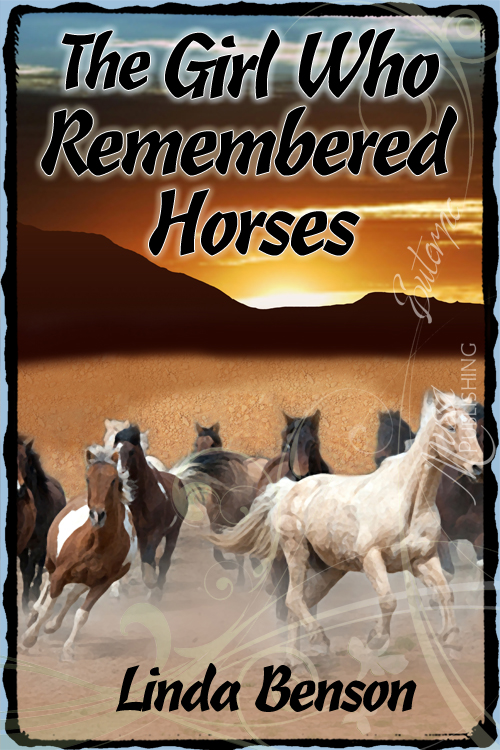
Since most of you that follow this blog are not only horse people, but also readers - I'd like to talk a little more about my most recent book, The Girl Who Remembered Horses, which released November 2011.


This is a novel set in an imagined future, in which the world has forgotten the ancient bond between horses and humans. One girl, however, dreams of horses, although she has never actually seen one. Here is a short blurb:


Several generations into the future, Sahara travels with her clan in a barren environment where recyclables are bartered for sustenance, and few remember horses or their connection to humans. But Sahara has recurring visions of riding astride on magnificent animals that run like the wind.

With the help of Evan, a young herder from the Gardener's Camp, Sahara discovers a crumbling book containing pictures of humans riding horses and learns her visions are real. Confronting a group of hunters led by hot-headed Dojo, Sahara rescues a wounded horse, but the animal escapes before it can be tamed.

Sahara is labeled a foolish dreamer and almost gives up her quest. Following horse tracks into a remote ravine, she finds wild dogs attacking a dying mare, and must drive them off in order to save the foal. Now she must attempt to raise the young animal, finally convince her clan of the ancient bond between horses and humans, and learn the secret of her true identity.


I talked about the inspiration for this novel in a post I wrote last November - how the story intertwined my research about women's passion for horses and the dire fate of some horses today. If you missed it, you can read that post right here.

I published The Girl Who Remembered Horses with a brand new publisher called Musa Publishing, which at the moment only produces eBooks. (Hopefully they will come out with books in print at some point.) At any rate, although the eBook market is taking off big time, it still limits the audience to those that have an eReader. (Although there is a PDF version available, too, which can be read on a computer.)

The Girl Who Remembered Horses is labeled Young Adult, but at the moment I believe only a handful of young adults have actually read this book. So far, based on the numerous 5-star reviews the books has been gathering on Amazon, it's mostly read by adult women - some of them horse gals and some of them not, although I do have one great review by an 11-year-old girl.

I would love for this book to be more widely read by an even younger group of readers: those ages 9-13, a middle grade or tween audience. But how many kids of this age have access to an eReader? I believe we are in the early stages of reaching that audience with eBooks. As more and more adults buy Kindles and Nooks and tablets, the older versions will eventually get passed down to the younger members of the family, who hopefully will be able to choose their own reading material. Some teachers are beginning to use eReaders in the classroom, and libraries are ordering more and more books their digital collection for readers to borrow. Musa's books, in fact, will soon be available on Overdrive, and available to many libraries across the country.

So in order to increase the readership of this book, I'm giving away three copies in a random drawing. I hope that if you win, you might do one of two things - either write a review somewhere (on Amazon, B&N, Goodreads, or a blog, if you have one) or allow a younger reader to read this book, and let us know what they think.

All you have to do to enter is leave a comment below and tell us how you read eBooks. (On a Nook, a Kindle, a tablet, an iPhone, or even on your computer.)

Help me get this book out to a wider audience. Is it best enjoyed by adult women, young adults, or younger readers? I would love your thoughts - and I appreciate the help!

  • Leave a comment below to enter.
  • 3 Copies Available
  • Contest open through midnight, PST, April 15th, 2012.
Thanks, everyone! Good Luck!

Sunday, April 1, 2012

The Weigh-in


Over the past several months, I discovered a very large downside to not riding on a regular basis (actually not riding at all would be more like it). I am way out of shape.

Of course, I realized riding was good exercise. What did surprise me was how many parts of my body are affected by not riding horses. While I haven't actually put on weight, I am definitely more out of shape  in ways I didn't predict. My usual 30-minute walk at lunch leaves me huffing. Mowing the lawn hurts my arms. Walking up four flights of stairs to my office is next to impossible because my leg strength is gone. Even gardening is a chore. Okay, we could chalk it up to getting older, but riding horses did keep my body younger than most women's bodies of my age group.

Something needs to change. No, I don't plan on buying another horse anytime soon, if ever. Nor do I plan on leasing one. A new horse is not part of my current or future plans. Paying off bills and carving out time to write are along with working on my property.

When a writer friend of mine, Lucy Monroe, invited me to be a team captain for her fitness challenge, I jumped at the chance. I'm competitive so what could be better than almost three months of competing with others to lose weight and get in shape. Even better is the added pressure of heading a team (I've always been better under pressure) and being a good example. Also, the team captains have a side bet in which the winning team gets to donate the proceeds to the charity of their choice.

So today is the first day of Lucy Monroe's Fitness Challenge and what I hope will be three months of eating better and exercising more. We're using MyFitnessPal.com as our fitness/weight tracker. If you haven't used this tool before and are interested in losing weight, I strongly recommend it. It's free, and it's pretty simple to use. There are also apps for iPhones and Androids. What I love is that it tells you how much you need to eat to lose so many pounds in so many weeks. I find that extra incentive quite helpful.

Wish me luck as I embark on yet another attempt to lose weight. I'm hoping the team concept is what I need to finally stick with it. If you'd like to join us, I don't think it's too late to sign up either. Lucy is offering some nice prizes, especially if you're a fan of romance novels.

I'll keep you posted on my progress.