Showing posts with label horses. Show all posts

Wednesday, July 8, 2015

Is It Worth It?


                                                by Laura Crum


            (Believe it or not, this rambling post is at least partly about horses and writing—for those who wish I would return to the theme of this blog.)


            “Truth is, everybody is going to hurt you; you just gotta find the ones worth suffering for.” --Bob Marley


            A friend of mine posted this quote on facebook and it made me think. There is a lot of truth there. The way I often phrase this concept to my son is, “Nothing worth doing is ever easy.” I find this to be true of people, animals, and pretty much everything else in life. I guess it depends on how you define the word “suffering,” but my experience has been that all the good things in my life have also been a very real struggle at times.
            Take motherhood. Every mother out there knows exactly what I mean. I don’t really have to say more. There is nothing more rewarding and yet there is also nothing more frustrating. Two halves of a whole. You definitely suffer—you shed tears, are miserable, get angry…etc. But you know from the bottom of your heart that it is entirely worth it. Your love never falters. (I wove all my insights about this experience into my tenth novel—Chasing Cans—for those who are interested.)
            My relationship with my much-loved husband wasn’t always easy either. We were both strong people; we butted heads when we disagreed. But there was no moment when I didn’t know that whatever pain came to me from our struggles, Andy was and is entirely worth it. My love never faltered. I don’t believe his did either.

            “If she’s amazing she won’t be easy; if she’s easy, she won’t be amazing.” Another quote from Bob Marley.

            I can’t say I’m amazing, but I can say for sure I’m not easy. And yet Andy and I were very happy together. At the end of his life, when I apologized to him for all the ways I was difficult, he told me that he wouldn’t change our past even if he could. “You’ve been a good wife to me,” he said. (Of course, this was a guy who liked a challenge. I don’t think he ever would have chosen an easy woman. He never chose the easy road in any part of life. As he put it, “I like scary things. I’m the guy who likes going downhill fast on a bicycle.” And he was also the guy who chose to learn to play the bagpipes in his fifties—after never having played any musical instrument to speak of. Yep, not one for the easy route…)

            The more I think about it, the more this concept sinks in for me. And yet we are taught that being “nice,” being “easy to get along with,” is the right thing. Being “difficult” is the wrong thing. I still remember a friend telling me that my mother had once said to her (talking about me), “My oldest daughter can be difficult, but she has a very loving heart.” The friend thought I would be touched by the “loving heart” part, but what I heard was the “difficult” part. Once again branded, as I have been my whole life—as “difficult.”
            Yep, if you speak the truth, you are difficult. If you don’t go along with the crowd, you are difficult. If you stand up for what you think or feel, you are difficult. If you don’t knuckle under when pushed on, you are difficult. If you defy authority when authority tries to bully you, you are difficult. If you follow your dreams when others find this inconvenient, you are difficult. So yes, I am difficult. But maybe that’s not so bad?
            When it comes to horses, I have known my share of difficult personalities. Perhaps the best horse I ever rode (Flanigan), was rejected by his previous owner for being difficult. (In fact this owner tried to starve the horse into submission and almost killed him—reducing him to skin and bones.) Flanigan was cinchy and he would buck. He also wasn’t friendly and would pin his ears at you and scowl ferociously. But if you handled him appropriately, he would do anything you asked, and he was an immensely strong, competent horse that could perform in amazing ways. I was able to do many things in my life that I can’t imagine I ever would have done without this particular horse (compete effectively at team roping, cross the Sierras numerous times over some very rough passes…etc). I loved Flanigan. But he was undeniably difficult in many ways. A strong, honest, opinionated personality—with a heart of gold. Maybe that’s not such a bad thing?
            I was sitting in my barn one evening pondering my many faults and being sad for all the times I was/am difficult for those that I love. My little yellow horse walked up to the fence and nickered at me.  And then, suddenly, for a brief moment, I really got it.
            Because Sunny is the personification of difficult. Those who have read this blog for a while may remember my numerous posts about the way this horse wants and needs to test his owner/rider/handler. Sunny will periodically try to evade being caught, offer to kick, offer to nip when cinched, try to step on your foot when being saddled, try to evade being wormed or fly sprayed, refuse to load in the trailer, try to balk when he’d prefer not to go a certain way, crow hop when he’s feeling resistant…etc. Sunny doesn’t do any of these things in a very determined way—if you are firm with him he knocks off the cross grained behavior very quickly. But he always needs to try it occasionally—it’s just part of who he is. The thing is that I don’t mind it at all.


            I’m quite willing to conflict with Sunny when he asks for it, and set him straight on who is the boss in our relationship. I’ll wallop him any time he needs/demands it. But I’m not angry with him. I like him. His ornery ways just make him interesting. And it is this very same tough-minded attitude that makes him such a steady, confident, reliable trail horse—and it is for this reliable-ness that I love him.
            Because I do love Sunny. I love him because he’s come through for me over and over again—every time it counts. He’s kept me intact and helped me keep my son safe in all kinds of situations that could have gone the wrong way. I trusted him and my trust was not misplaced. I love him for what he’s given me and I will take care of him for the rest of his life out of love.
            Would I have loved him more if he was easier and sweeter? I don’t think so. It is his tough mindedness that gave him the ability to be so confident and reliable. And it is his funny, ornery personality that makes him so interesting. I love him the way he is—his cranky ways don’t bother me. And in the moment when this truly sunk into my mind, I understood that maybe Andy felt that way about me.
            Because for all my cross grained ways I am reliable as Sunny is reliable. I came through for my husband and son in every way that I knew how—I was and am completely devoted to them. Maybe being difficult is not just a negative? Sunny’s ornery, opinionated ways are honest and open—he’s not afraid to show who he is and how he feels. I like that about him. I like his strength of mind. Whatever frustration he’s caused me, he’s been entirely worth it.
            Sunny and Flanigan were and are two very strong individuals—and it is that very strength that caused me to love them. Just as it was the huge strength of character in my husband that drew me to him. Strong beings aren’t often easy. And maybe love is partly about feeling free to express who you are--even when it is difficult for others--and trusting that you will still be loved. As I say to my son, "Nothing worth doing is ever easy." Perhaps I should add, "Love isn't about what's easy, either."
            This has been true (for me) not only concerning personalities and relationships, but also events, activities, disciplines…you name it. Finishing my first novel wasn’t easy. It took persisting in the face of much undermining by “well meaning” friends and family members. Getting published by a major publisher wasn’t easy. It took years, lots of struggle, and many dark moments. Learning to train horses and compete effectively at cutting and team roping wasn’t easy. Ditto the years, struggle and dark moments. Creating a garden in these dry California hills complete with veggies, greenhouse, rambling roses, fruit trees, swimming pond…etc—yep, took years of struggle and constant effort. Not easy at all. But all those things were entirely worth it.
            So I guess my take home message is that maybe we should look past what is easy. In horses, and people and life pursuits. Instead of looking for what’s easy, maybe we should look for what’s worth suffering for. Any takers?


Wednesday, June 17, 2015

Horses and Writing (Now)


                                                by Laura Crum


            That’s what this blog is supposed to be about. I have deviated—A LOT-- from the theme, I’m afraid. My interest lately is all about what counts…what in my life is worth focusing on in the light of mortality. Ever since my husband died, my life has changed in many ways. And most of all in the sense that I only give my time to what needs to be done to take care of our little life here, and to what I do out of love. I still love my horses and I still write—I think these things are part of what counts for me. So I can give an update on my horses and my writing, I guess, if anyone is interested.
            Since I’ve owned horses all my life and I don’t dump them when their using life is over, I have (no surprise) a bunch of old horses. My horse property accommodates four horses easily, five is OK, and I’ve squeezed six in at times (not good). The way I feel these days, four horses is plenty. So I have my retired horse, Plumber (26), my son’s horse Henry, still a good walk/trot riding horse on level ground at 27, though no longer comfortable climbing hills, and my Sunny, somewhere between sixteen and twenty and still sound and a good trail horse.


 And I also keep my friend Wally’s Twister—19 and still going strong as a team roping horse. I’ve promised to take care of Twister just like he was my own if Wally dies. I don’t plan to acquire any more horses. My Gunner lived to be 35, and at that rate I have a lot of years of horse care ahead of me with these guys.


            All of the horses I have here have been with us many years. I broke Plumber as a three year old, and trained him to be a rope horse. He carried my son and me when my boy was little, and took good care of us.


 Sunny and Henry took us on hundreds and hundreds of trail rides and gathers for seven straight years—on the beach, in the hills, and in the mountains—without one bad moment.


             We owe these horses and I am glad to repay them by giving them the best life that I can. But my interest in riding isn’t very high right now. I’ve ridden a couple of times this spring with my son and we both enjoyed it. I’m still not drawn to make much effort in that direction. Our horses seemed to enjoy being ridden after such a long break, and I think they would be pleased if we rode a little more often, but I just don’t have the emotional energy to devote to this pursuit.
            Don’t get me wrong. I loved to ride and I’m so glad that I spent many years horseback. I don’t regret it at all. But I see now that the space and freedom that I had to give my energy to exploring horseback pastimes came a great deal from the content and security I felt with my husband. Even though he was not a horseman himself, he supported me (financially and emotionally), and his support gave me the freedom to enjoy my life with my horses in the way that I did. Thank you, Andy.
           
            My energy now goes into tending the garden (by which I mean not just the veggie garden but the entire property), making sure all critters are well cared for, and that my son’s life stays good. There just isn’t any energy left over for other pursuits. So though I sometimes feel sorry for the horses, and think they look a little bored, I have to tell myself (and them), life isn’t perfect for any of us right now. And their life is pretty good.
            They have plenty of room to run and play, they get fed grass/alfalfa hay three times a day, there are shade trees and sunny spots and soft ground for rolling, shelter from the rain, and plenty of equine companionship. Their feet are trimmed, they are wormed as needed, and we get them out to be groomed and to graze as much as we can. All of them are at a good healthy weight, pasture sound, and seem to feel fine. There are many worse lives that they could have as older horses.
            So that’s my horse life. Not too exciting perhaps, but I do enjoy having the horses here, I am grateful for the many years of reliable riding service each horse has given us, and I plan to take good care of them all until they die. This is what love means to me when it comes to horses. And they give me back love in return—just by their presence in my life. The nickers when I come to feed, meeting me at the gate to be caught, the soft sound of hay being chomped as I sit in the barn, the look, smell and feel of these big, gentle creatures. The willingness to carry me on their backs any time I choose to ride. Horses are still magical to me.  I can’t imagine living here without horses.


            As for writing, well, I still write. Like the horses, I can’t picture my life without writing. I don’t write novels these days, but I write these blog posts and I keep a journal, and I have written several memoir pieces. I posted one of them (My Life With Horses) in installments on this blog, and I have finished another one (Ordinary Magic). I’ve begun one about my husband’s life. Not sure what the ultimate goal/fate of these pieces is. I wrote them to please myself, but some of you said you enjoyed the Life With Horses story, so maybe I will eventually put the others up on this blog. We’ll see. You can let me know what you think—if you’re interested.
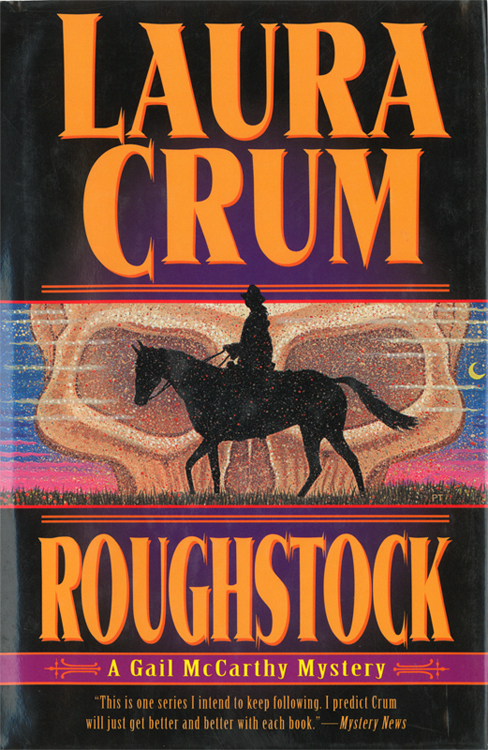
            I’m often asked if I’ll write more novels. The short answer is that I don’t think so. I wrote twelve novels in my mystery series featuring equine vet Gail McCarthy, and a dozen novels was always my goal for that series. If you are interested in my thoughts about horses and life in general, I wove many of my insights into this mystery series, which covers twenty years in the life of one woman—and took me twenty years to write. Serendipity. The series also covers different aspects of the horse business that I’ve been involved with—from cutting and reined cowhorse competitions through ranching, team roping, horsepacking in the mountains, breaking and training young horses, and trail riding here in the hills and on the beaches of the California coast. Not to mention raising a child with horses. So if you’ve enjoyed my blog pieces I think you’ll enjoy the novels, which are readily available on Amazon.


            And yes, that last bit was blatant self-promotion. I don’t bother with this sort of thing much any more. I don’t really need the money and I understand (from the little bit of local fame that I’ve experienced) that the admiration of strangers isn’t something that I need or crave. But the truth is that I DID put a huge amount of creative energy into my books—any little insight I ever had about life and horses got added to one book or another. My husband and son make appearances in the latter part of the series, and many friends and acquaintances have turns as villains, victims, or suspects. (I often cast people I really like in the roles of victims or villains because if a victim or villain is not a truly interesting character, the story will fall flat.)


            Anyway, for those who read my blog posts or have friended me on facebook—if you like my writing here I’m pretty sure that you’ll enjoy my novels. If you read on Kindle the books are very inexpensive. And if you don’t read on Kindle, I was able to buy the first book in the series for a friend (used hardcover in perfect condition) for less than four dollars on Amazon.


            The series begins with thirty year old Gail McCarthy beginning to practice as a horse vet in Santa Cruz, California, and ends with now fifty year old Gail deciding whether its time to retire from practice. Every single book has lots of horseback action and all the details were drawn from my life spent with horses. The order—for those who haven’t read the books and want to read them in order-- is:


            Cutter (cutting horses)
            Hoofprints (reined cowhorses)
            Roughstock  (roping and endurance)
            Roped (ranching and roping)
            Slickrock (horse packing in the Sierra Nevada Mountains—and overall reader favorite)
            Breakaway (trail riding and training a colt—also the darkest of my books)
            Hayburner (breaking a colt and finding a partner)
            Forged (trail riding on the coast and marriage)
            Moonblind (TB layup farm and pregnancy—non-moms don’t usually like this one)
            Chasing Cans (barrel racing and raising a baby—non-moms same as above)
            Going, Gone (an auctioneer and trail riding in the hills)
            Barnstorming (yet more trail riding and life choices)


Wednesday, February 25, 2015

233 Horses


                                                            by Laura Crum

            My husband named this photo “233 horses”—I believe because the Porsche has 230 horsepower (?) I am not by nature a car person. But we bought the little red convertible as a wedding present to each other. My husband wanted a sports car. I wanted a reliable car, not one that was always in the shop, and for me that eliminated the British and Italian cars. Andy wanted a car that handled well, and I wanted one that felt solid and strong. We settled on a Porsche as the logical choice. And Andy was sure that we’d have a child (despite the fact that we were pretty old when we got married), so he wanted a car with a back seat. And he wanted a convertible. So the Carrera Cabriolet (I hope I have the terms right—not a car person, remember) was pretty much the only option. It was also one of the few sports cars that actually fit my six foot seven husband.
            We shopped for awhile, but when we came across this 84 Cabriolet with low mileage, we bought it. The photo was taken shortly after we bought the car, up in our pasture in Mariposa County. The three horses in the photo—Gunner, Flanigan and Freddy—are all dead now. Andy is dead. But the car…the car looks pretty much the same as it does in the photo. It runs great. It is as alive and thriving as it ever was. Which is to say not. It’s not alive. Still, I found myself unable to sell it.
            While Andy was alive, I never once drove this car. It was tricky to shift and a race car by nature and Andy had it remodeled (seat moved back, steering wheel changed out) to suit his tall frame. He also remodeled the suspension and the clutch in order to do autocross with the car. Not only did I have no interest in driving it, I couldn’t have if I had wanted to. I rode in it a lot, as did our son (Andy was right about that part). But the car was Andy’s car—we all thought of it that way. Papa’s red car.
            When Andy got sick and we knew he did not have a lot longer to live, he told me I should sell the Porsche and get something more practical. I told him the truth. “I just can’t.” The car meant something to me. It represented Andy and our life as a family. I have so many memories that the car is a part of. So I asked Andy who could help me fix the car up so I could drive it. And he told me who to go to.
            After Andy died, one of the many, many things on my list of things to do was to get the car to the Porsche mechanic he had recommended (Tim Benson of Fast Lane Porsche, if anyone is interested). And eventually, the car came back to me, with the seat and steering wheel back to the original, the clutch redone so that I could deal with the shifting (I have not had a manual transmission to drive in many years), a new top (the old one leaked), and completely detailed. It looks, as I said, much as it does in the photo, which was taken about fifteen years ago. The little car is thirty years old now. But it looks and runs great. And I am learning to drive it.
            Why am I doing this? I am not a car person. But I “love” the little car. I love it because it was Andy’s, because of the memories it holds, because my son is fond of it-- just because I could not sell “Papa’s red car,” and if I wasn’t going to sell it I had to learn to drive it.
            And this has made me think a bit about the wisdom of being fond of material objects. I am not talking about the obsessive love of collecting more and more “stuff.” I am talking of the fondness one can have for a beautiful, well-made object like this car, or a lovely musical instrument, or a piece of fine art, or a good chair…etc. Such things can be cared for and they will not just last your lifetime—they can last for many human lifetimes. There is some peace in being fond of them.
            I’ve spent my life loving horses and other animals, as well as a few people, and the thing is, they die. I’ve written a lot lately about death and I haven’t any more thoughts to add to that subject right now. But there is no question that the death of a loved person or animal is very hard for us to bear—whatever it may mean in the grand scheme of things. Maybe I would have been better off to be a car person after all? Cars do not die (though I suppose they can be smashed).
            I drove the little red car yesterday. I’m getting used to it. It’s like a new horse—you have to get the feel of it. My husband told me that when I talked of driving it. “You have to get along with it.” And you know, I think I am going to be able to do that. I think I may become fond of driving it, actually. It is quirky and iconoclastic, a bit like an animal. As Andy once said of this car, after driving a generic rental car, "At least it has a little heart and soul."
            So yes, here I am, the person who has loved horses and ridden horses for her entire life—and my current project is this little red car. I have not ridden a horse in many months—though the horses are all healthy and doing fine, and I take good care of them. But I am driving the little red car. And yesterday, when I was done, I took a rag and polished the dust off the hood. This is not something I ever could have imagined myself doing in any moment of my past life. And I think I could feel Andy smiling.
            Maybe I am becoming a car person?

Wednesday, February 4, 2015

Comfort and Horses


                                    by Laura Crum

Be warned--not a cheerful post. 


            Since my husband died I have had several well meaning people tell me to take comfort in my horses. These comments range from the woman who never owned a horse in her life telling me that horses were powerful spiritual beings and I needed to go to them and rub their velvety muzzles and …etc, to kind fellow horse owners mentioning that a ride through the trees on a good horse can be soothing. I have no doubt that all these things might be true. But I cannot muster much interest in them.
            My life right now is an endless round of getting things done that must be done while I am so sad. I feed the horses three times a day, I cast an experienced eye on them, noting that they are sound and bright eyed and seem normal. I have their feet trimmed, and I run my fingers over them to be sure they feel right. I would know if anything was wrong. I have owned horses non-stop for over forty years. The horses are fine.
            They may be a bit bored, but the youngest of them is nineteen, and they all run and buck and play when they feel like it. So I think their life suits them well enough. They are certainly doing better than I am when it comes to having a happy life.
            Do I get comfort out of them? All I can say is I don’t wish them gone. I smile sometimes when they gallop up to greet me. I don’t want to betray their trust. I told them I would keep them and take care of them and I plan to do that. Sometimes I sit in the barn and watch them eat. Maybe I take a little comfort from them.
            The truth is that there isn’t much comfort for me in the world right now, and that’s just the way it is. I look at other people discussing the normal matters of a “normal” life and I feel that we don’t live in the same world. Quite frankly, I feel their world does not exist-- that it's an illusion. That world where hair color and sporting events and social engagements have some meaning—that world just isn’t real. In my world I stare straight on at mortality. Anyone can die at any time. The only constant is change and impermanence. This is the real world. Those other people live in it, too, but they don’t want to see it. I don’t blame them. I wish I could be like them again. But I don’t have a choice.
            I can still feel love for my son and our animals; I can smile when the corgi puppy is cute, and see the beauty in the wild birds that come to our pond. I can tend our garden and think it is the right thing to do. I can be glad the horses are healthy. But the kind of comfort that comes from feeling content and secure in the world, happy with the illusion of stability—no I don’t get that kind of comfort from anything. And I have to say that I’m pretty damn sure I’m looking at reality.
            My hope is to become peaceful with that reality. Not to close my eyes again and suppose that things of no meaning are important. But to see the world in all its constant change and mortal loss and be aware that I’m part of it, I’m connected to it. And that love is real.

Wednesday, November 20, 2013

The Difference Between People and Horses


                                    by Laura Crum

            Horses are honest. If a horse looks mad or scared or happy or hungry or curious or excited or what have you, he is. Once you learn how to read a given horse (they’re all different), you can pretty much tell what he’s thinking most of the time. You may not be sure how you want to respond to him to get the results you’re after (this would be the skill of horse training), but you know where he’s coming from.
            People on the other hand…people are deceptive. The smile and act as if they like you and it often means nothing. Inside they might feel quite negative towards you, even as they mouth those pleasant phrases. A lot of the time they aren’t even honest with themselves about how they are feeling, and so it is literally impossible to have an honest conversation with them. They don’t know how. Not only can you not read them, they can’t express an honest emotion.
            And then there is that particular sub-group that are drama queens. Not only are they not able to be honest and straight forward, but everything is ALWAYS a big deal. They express a lot of emotion all the time but none of it is particularly honest. They are usually not speaking to someone or at odds with someone in their immediate context. The drama changes, but there is always a drama. They seem to feed on this.
            At this particular moment in time I am fed up to here with the dishonesty of people and their silly dramas. This isn’t exactly a relevant subject for a blog post on an equestrian and writing themed blog…or then again, maybe it is. I am betting that many of you horse people out there know exactly what I mean and possibly even feel this way yourselves from time to time.
            Speaking for myself, I relate to the world more like a horse than a person. I know, that sounds weird, but it’s true. If I smile at you and say something friendly, I feel friendly towards you, if I look sad, I am sad, if I look annoyed, I’m annoyed…etc. I don’t pose, and I don’t pretend to feel what I don’t feel. If I don’t like a person I mostly avoid that person, but if the person chooses to confront me, I am honest about how I feel on any given subject. I try to respect other people’s space and their feelings as I would like to be respected, but the bottom line with me is honesty.
            This doesn’t always work out too well. Some people like me because they always know where they stand with me, and others find me too blunt. I’m OK with this—the ones who find me too blunt aren’t usually people I am drawn to, anyway. I like direct people. I like people who are like horses, if you see what I mean. Easy to read. What you see is what you get.
            Usually when I get a “false” vibe from a person, I avoid being involved with that person. But sometimes life circumstances force a relationship with a person who doesn’t give you a good vibe. And in my experience this always leads to trouble.
            Whether it is a co-worker, or your child’s teacher, or the new barn manager at the barn where you have always boarded, that niggling feeling that “this person isn’t being totally honest with me,” is always a red flag. But it is sometimes very difficult, verging on impossible to avoid said person.
            My recent experience with this sort of situation has just blown up in my face, causing me to reflect once again on the fact that I do much better with animals overall than I do with people. Thus I have a lot of sadness, and a good deal of bitterness in my heart this morning…and thus you get this blog post.
            I am trying hard to focus on all the good things in my life, and there are really so many good things. Gratitude is the right response. I’m also trying to believe (and I actually do believe it) that this particular door is closing for a reason and that it will help guide us to the path we are meant to be on. I’m aware that the bitterness will pass. I am, in general, a happy person, and my husband and son are also happy. This is a small thing in the big picture. But at the moment I prefer horses to people, thank you very much.
            Anyway, on that note, I am grateful every day that my 33 year old horse, Gunner, is still with me. I don’t know how long this can last—his arthritic issues are getting worse as he gets older. But I give him pain killers and hang out with him, and I learn a lot from his honesty. He’s still playful and spooky, just as he was as a young horse, and yet there is a deep wisdom and acceptance there, too. Looking into his eyes reminds me that all I can do is be honest myself and roll with the punches as they come along. Tomorrow is another day. (I’m sure I’ve heard that somewhere before.)
            And so, I give you Gunner’s gaze. I think this photo says it all.


Wednesday, April 24, 2013

On Being a Hermit


                                                by Laura Crum

            An advance warning here: This blog post contains a small rant. I didn’t set out to rant, but somehow no matter how many times I re-wrote the piece the rant crept in there. So I gave up and left it in. The post is now sort of bittersweet. It tells a reasonably pleasant story that I meant to tell, and it also gives a true view of the frustration I often feel. I am hoping that there are a few of you out there who will both understand my joy in being a hermit and also my frustration with what Ratty (of Wind in the Willows) called “the wide world.”
Anyway, those who read this blog and my books may perceive me as a reasonably social person, but the truth is far different. In real life, I really am something of a hermit. And lately it’s getting worse. Or better. Depends on your point of view.
            In my old age (I’m 55) I am just plain happy at home with my husband and son and my horses and other critters and my garden. Doesn’t matter if I’m riding or doing chores, I can fill hours messing with the horses and/or wandering around the garden observing what’s in bloom (in the spring) or ready to be harvested (summer and fall). Truthfully I can fill happy hours watching the spring breeze toss the treetops on the ridges, or watching the goldfish dart around the pond, or the quail pecking in the riding ring, or the lizards catching bugs. I could seriously go on all day listing tons of small events here on my mini-ranch that happily engross me. I like to write, so often I write about these things. I like to take photos…and sometimes I post them here and on facebook. And I like to sit on the porch with a cup of tea in the early morning and a margarita in the evening watching the light change. I am never bored.


            Fortunately I married a man who is also happy to avoid the social scene, and our son, like us, is an introvert, who appreciates lots of time alone. I make sure my son has a social life with his friends that works for him, but my kid, like me, enjoys swinging on the barnyard swing and just watching the horses and chickens (and sometimes the deer and bobcats) for a good bit of time each day. Yes, we ride with our friends and do more ambitious things, but I think we get our greatest joy just being peacefully quiet here in nature.
            There is so much to see and do in the springtime….the chickens are endlessly entertaining. Toby the rooster struts.


            Our cat Tigger amongst the hens.


            A one day old bantie chick.


            The roses are really starting to bloom. This is Fortune’s Double Yellow rose in my wild garden. It’s not really yellow, but it was discovered by the plant hunter Robert Fortune in China in 1844, and at that time there were no yellow roses in commerce. So this rose was a big deal. And it is still a glory today. An early rose-- it is always in full flower in April.


                                            We ride and have much fun with our horses. 


            So my life is good and happy and I have no complaints. It’s just that I feel I don’t fit in any more in groups of people. There are friends that I care about, and one-on-one with them I’m fine. I can be polite and reasonably friendly with waitresses and checkers and such. I can hang around with my horse friends and talk horse. But put me in a group of folks that I’m just barely acquainted with, and I’m no good at all. In fact, I’m kind of miserable.
            The problem is that I think my social skills (what I had of em) are slowly vanishing. I’m becoming a hermit. I feel out of place with groups of people any more. I try. I treat others as I would like to be treated—which means I respect their space and I say what I mean and mean what I say. Somehow this isn’t working too well. Other people just don’t seem to play by this code.
            As far as I can tell, many people expect me to mouth things I don’t mean, and make nice when others are treading on my toes. And when I let them know (in my straight forward way) that this sort of thing doesn’t fly with me, I am perceived as a grouch (actually I think the right word has one less letter and also ends in “ch”). And then a lot of people seem to share a form of sarcastic humor that I mostly don’t get and don’t find funny when I do get it. If you take a shot at me with venom disguised as humor, I still read the emotional content perfectly, and I don’t care for it. I’m liable to let you know that I don’t care for it, too. 
            It feels to me that my instincts have become similar to my horses and other critters. I expect truth and honesty and simplicity, just as I get from my animals. I try to give it back. I’m not comfortable with the two-faced attitude shown by many people, and on top of that I don’t share their interests. I don’t watch TV and I don’t like popular music and I really don’t “get” a great deal of popular culture, from politics to fashion to sports. I don’t want to get it. I’m interested in the green color of the light before a storm and the specific scents of different roses and how many words my smart little dog has learned to understand. I could spend hours listing the fascinating things that delight me here at my home. But I find many people confusing, and, to be frank, boring. I do better with animals.
I often leave a group interaction with people feeling frustrated. I don’t try to manipulate any one into doing what I want them to do.  I really resent others trying to manipulate me. I don’t take covert shots at people. If there is something I don’t like or don’t agree with, I’ll say so—openly. And I am fine with others doing the same with me. It doesn’t threaten me when someone disagrees with me. But it seriously annoys me when someone takes a sneaky shot at me—in the guise of “teasing humor.” I had a “friend” like this once. When I let her know that her malicious little games were not OK with me she wrote me off and never spoke to me again. Since then I’ve been a lot more careful about who I accept as a friend. For me a friend is someone “who stabs you in the front” (I believe this is a quote from Oscar Wilde…thanks, Dahlia).
In short, more and more I feel like a misfit around other “normal” people and can’t wait to get home and shut my front gate behind me. Sometimes I lock it.           


            Here, back with my horses and dogs and cats and chickens and garden and little family, I let out a deep breath of relief and feel almost instantly happy again. Here I fit in. I’m good with a horse, I get along with my kid (sorry all you mommy bloggers, but its true), and I love all the plants and animals of this place—domestic and wild. I listen to my husband play his pipes and enjoy the wild notes drifting out over the ridge. The horses graze contentedly by the vegetable garden. The little dog sits in my lap; I stroke her rough fur and I can smell the jasmine. I feel a real sense of connection and peace. Yes, I am
 becoming a hermit. A happy hermit.


            Does anybody else feel like this? I keep wondering if other people might be “hermits” like me, and possibly share some of my frustration when it comes to interacting in the “wide world.” I don’t mind being a loner (not at all), but it is fun to share thoughts with like-minded folks, so I’m putting this out there just for fun. Any horse loving hermits reading this blog?
            

Saturday, September 15, 2012

On random accidents and the importance of wearing a helmet


Last year, when I bought Qrac, my Lusitano, I wasn’t used to wearing a helmet. I’d never worn a helmet when riding Kwintus, my now-retired schoolmaster. Of course, not wearing one when riding Kwintus was stupid as he had a recurrent stumbling problem, and it was eventually because of his stumbling that we had to retire him.
 

I think we all agree that it’s dangerous to ride without a helmet, yet I’m sure most of us have done so at some point in our lives. I see many young riders at my stables riding bare-headed or in trendy looking baseball caps. Most of the professional riders I know still ride without helmets, but when questioned on the subject they tend to go all sheepish, then wrinkle their nose and say that they know they should, really. Then why don’t they? One professional replied that it would mean wearing a helmet eight to ten hours a day, and they give her a headache. I told her I understood where she was coming from, but that there are many very light, comfortable helmets on the market. I also asked her if she’d ever read about what had happened to Courtney King-Dye.She hadn't, so I told her the terrible story in a nutshell. Maybe she'll Google it, and show up with a helmet next week. But I doubt it, and that's okay.

Granted, there’s something nice, even something romantic, about riding helmet-less. There’s that sensation of freedom, of the wind in your hair. There’s also the added bonus of not having to wash your hair on a daily basis; I don’t know about you, but I sweat enormously through my head  so there’s no way I can take off my helmet, tip my head upside down and glamorously toss my tresses back into a swingy, silky do. No siree; when I remove my helmet, my hair is super-glued to my head, bald-eagle style. It’s ever so attractive.

Anyway, during my initial weeks with Qrac, there were days when I didn’t wear a helmet. However, I didn’t feel exceedingly comfortable helmet-less as he was pretty rushy-pully back then, so most days I put it on. In fact, most of the times when I didn’t wear my helmet was because after so many years with Kwintus, taking it out of my cupboard and putting it on hadn’t become a reflex yet, and I genuinely didn’t always realize that I wasn’t wearing it until I’d gone down the road to the arena, and then couldn’t be bothered to go all the way back up again (the arena was quite a ways from the stable block). But I soon got into the habit of wearing it, and last November, when I moved Qrac to my current stables, most of the other dressage ladies wore helmets, and the set-up was different (I clip my helmet to the wheelie-trolley I use for my tack and other equipment), so I have a visual reminder as well.  

There was one time in February, during the big freeze in the winter, when Qrac had a slightly fat hind leg and could only be walked. This meant that I would spend 45 minutes or so just sitting on him, plodding around the indoor arena. It was about minus a bazillion degrees, I was wrapped up like a Michelin Man and wanted to keep my ears warm, so instead of my helmet I wore a woolly cap. I figured it was no big deal; after all, I was only walking him. 

Hmmm...

The second time I didn’t wear my helmet was about two weeks ago, during the tail end of our mad heat wave. Of course, that was the day when Qrac suddenly went bananas whenever I asked for the right lead canter, throwing his head around, going against my outside leg, even pulling up sharply and spinning to the left. Trust me, I wished I’d worn my helmet, even though nothing bad happened. A visit from the osteopath seems to have fixed my horse’s problem (he had a blockage in his hips), although he’s still a little iffy at times, so I’ve asked my “magic man” (a healer) to come and see him this coming week.

Anyway, those were the only two times when I haven’t worn my helmet since last November. And I was wearing it this morning, when I rode Qrac in the outdoor arena, and although he wasn’t on his best  behaviour and played me up a little in the right lead canter (trying to lean into his inside shoulder and switch leads, pretty much like he did when I first bought him), I had a pretty decent ride. Once we’d finished the more collected work, I did a couple of laps in a nice, deep and round, forward trot, then transitioned to walk.

I can’t remember whether I dropped my reins immediately, as what happened next took me completely by surprise. We came round the corner in walk, tracking left, when suddenly Qrac fell over sideways. Maybe he put his foot in an irregularity in the ground and his legs slipped to the right and his body to the left, or maybe he just got his feet in a muddle. I don’t really know, although the first option strikes me as the most plausible. If he stepped in a hole, maybe he then lost his balance by stepping onto one of the railway sleepers that line the edge of the outdoor arena (I hate them. They’re the same colour as the floor, and neither high enough nor low enough). Since we were only in walk, I wasn't thrown clear, so I stayed on him as he fell down, landing with my left leg underneath him. It didn’t hurt at all; all I felt was his soft belly on top of my leg, but I saw his four legs fly upwards on the other side, and for a split second I thought he might roll right over. Which would have been bad. Really bad. But he didn’t. He rolled back to the left, got up, and so did I, and I my first thought was, “oh dear, he’s a stallion and he’s going to run away,” but again he didn’t, and instead stood perfectly still, looking at me as if to say “what the heck just happened?”. I hobbled towards him and took hold of the reins. My left foot felt a little sore, as did the spot between my shoulder blade and the base of my neck, which clearly got a little strained when my left shoulder hit the ground.

In a bit of a daze, I checked him over to make sure he hadn’t cut himself, walked him on a circle to check whether he was regular, and then got back on. I walked, trotted, and then put him into the right lead canter, and to my surprise found him far more relaxed, far more “with me” than before he fell. In fact, I haven’t had such a good right lead canter in ages.  Did he freak himself out by falling and decide to be more focused? I don’t know. I only rode him for a few more minutes, but those were by far the best minutes of my ride. Strange, don’t you think?

Once we’d finished, I dosed us both with arnica and showered his legs for a long time, but chances are we’ll be a little sore tomorrow. I’m pretty sure I will be, despite a nice long soak in the hot tub when I got home.

Most importantly, what I learnt today is that, even though I didn’t hit my head when my horse and I went down, I’ll never sit on my horse again without wearing my helmet. Because this morning my horse went down for no particular reason, presumably like Courtney King-Dye’s horse. Qrac wasn’t misbehaving, he wasn’t being asked to do something complicated, he hadn’t spooked at something and lost his balance in a crazy spin. He just fell over, like we can fall over if we slip on a banana peel, or on a slippery pedestrian crossing, or simply trip over our own feet. Of course, some people will argue that if we wear a helmet, then we should also wear a back protector with an airbag, and that accidents happen, which is fair enough. Maybe one day I'll be wearing a back protector with an airbag; in fact I know one dressage rider who does. She fell off and broke her back, so I can see why she would. 

Has your horse ever fallen over for no apparent reason? I know we've discussed the issue on this blog before, but do you wear a helmet? Have you always worn one, or did something happen that convinced you to wear one? Do professionals around you wear helmets? Personally, I thought it was great to finally see some top dressage riders wearing helmets instead of hats at the London Olympics, and really hope that the FEI will soon make helmets mandatory for all competitors, if only to set the good, safe example, especially for young riders. Tell me what you think.


Thursday, May 31, 2012

Look, No Hands!


Mention alternative medicine in a conversation and you’re bound to get reactions all over the spectrum. Many people will be ambivalent on the subject, taking the “whatever floats your boat” approach, albeit often with a glimmer of disdain in their eyes.  The less diplomatic ones will tell you that you’re the ultimate nincompoop for believing that a couple of indiscernible traces of a highly centrifuged molecule in a glass of water could possibly have an effect on a headache, or a sore throat, or a cyst on your ovary. Edge the discussion towards slightly more woo-woo stuff, such as a blocked meridian or a dysfunctional chakra and chances are they’ll scoff loudly and derisively, turn on their heels and walk away. There’s someone like this at my stables; I know better than to broach the subject with her!

Not that I’m an alternative medicine fanatic. When it comes to medicine, I swing both ways. I’d say I originally belonged to the ambivalent clan, but that, over the years, personal experience has opened my mind to the powers of homeopathic medicine, essential oils, naturopathy, etc. About ten years ago I suddenly developed intense day-long headaches on a daily basis which I was convinced were triggered by a short, ill-advised stint with a contraceptive pill. I’ve always had bad reactions to the pill, didn’t want to take it, but my gynaecologist assured me that contraceptive medicine had come a long way, baby. Err…sorry doctor, but as far as I’m concerned, clearly not! I quit the pill within days of the headaches appearing, but months later, I was still suffering. I saw various doctors, had an MRI to rule out anything serious, but nobody could tell me what was wrong. I was living on pain-killers, and I hated it. One day, a week or so prior to attending a writer’s workshop in London, a lady at my Pilates class suggested I go and see her naturopath. She told me she saw him every couple of months to keep her energies centred and her meridians in order, and that he had incredible results with all kinds of ailments.

Somewhat sceptical but pretty darn desperate, I made an appointment with Dr. Garcia. He checked my pulse Chinese style, examined my irises, and told me what I’d suspected all along, that I’d been poisoned (by the pill). He then lay me down, ran his “remote control” over me (I call it a remote control; it’s really some sort of meridian detecting device), tried various remedies on me via muscle testing (you hold a remedy between two fingers, he tries to pry your fingers open and if your body needs this particular remedy your fingers won’t open. How much of the remedy you need is determined by how much resistance your fingers offer. Yes, it’s mega woo-woo, but it works, as things you don’t need just slip straight through your fingers. I promise.). He told me to avoid certain foods (anything acidic), to stay away from alcohol, and wrote a prescription for all kinds of obscure detoxifying drops (including a snake poison), which I filled at a nearby specialised pharmacy.

 Within forty-eight hours I no longer had a headache. Dr. Garcia became my hero, and from then on I consulted him for all kinds of problems. One of the most off the wall effects his healing powers had on me occurred after a visit for extreme fatigue and fuzzy-thinking. He performed some cranio-sacral therapy, fixed my meridians with his remote control and gave me some flower remedies.  I went home so energised that I felt compelled to go and run for an hour. I hadn’t run in decades prior to this visit, and I haven’t run since! Is that weird, or what?!
Of course, I also recommended him to family and friends. Dr. Garcia cured my mother’s tinnitus when all the ear specialists in Geneva told her there was nothing anybody could do. He helped my father with a multitude of aches and pains. Sure, there are certain things that Dr. Garcia hasn’t has mind-blowing results with, but in my experience the positive has definitely out-weighed the negative.

So, what does Dr. Garcia have to do with horses?  Well, nothing, really. But his positive results opened my mind, and one day last week while I was saddling up Qrac, I noticed a man working on a horse in the stall opposite the tacking-up area. The man was floating his hands up and down and from side to side, inches above the horse’s body. The horse, usually relatively hyper in his stable, looked sleepy and kind of out of it. I remembered that I’d heard about this man before from various people at my stable who swore by his amazing results. Intrigued, I watched more closely and once he’d finished, I went over, introduced myself and asked him some questions.

Mr. Merz is a “magnétiseur” who specialises in horses, although he also told me that he sometimes works on people, too. From what I understood, he manipulates horses similarly to an osteopath, but without touching them. He struck me as a good person, both gentle and friendly, and before I knew it I’d asked him whether he might be able to look at Qrac one of these days, not because I thought there was anything particularly wrong with Qrac, but to defuse any tensions or muscle blockages that might lead to problems later on. Of course, I didn’t mention that earlier in the week, Qrac ‘s left hind pastern had been a little hot and very slightly swollen, and that consequently I hadn’t worked him for a day or two until the heat and swelling disappeared, but that, nevertheless, when I’d resumed work he’d felt unusually negative, cranky, and “against me”. All I did was ask whether I might make an appointment with him, and I admit that it was more out of curiosity than concern. I should add that when I’d mentioned Qrac’s moodiness to my trainer over the phone she said it might do him good to see an osteopath. The problem is, the only osteopath she and I really like is virtually impossible to get hold of. So when I ran into Mr. Merz, I figured it was worth a shot.

As it happened, I was in luck; Mr. Merz was scheduled to return to my stables the following day to work on another horse, and could spare an hour for Qrac. He arrived on time (which is always a plus!) and I took him into my horse’s stall. I slipped on the halter and held Qrac’s head while Mr. Merz began to float his hands above my horse’s body, starting with his neck on the right hand side. I watched intently, stunned at the way my horse’s skin twitched and rippled as Mr. Merz’s hands scanned his body without ever touching him. Qrac’s eyes became sleepy, he yawned, made chewing noises, the extent of his relaxation altering depending on the area the man worked on. Mr. Merz detected some tension under the saddle area on the right hand side, and had me go and fetch my saddle to see whether it fitted properly. It did, and I told him it had been made to measure for Qrac last summer, but that I’d had to have it refitted recently because my horse had built up a lot of muscle. Mr. Merz thought the tension might be residual from before the modifications, or even come from an ill-fitting saddle before I bought him.

It was when he moved over to the left side that things became really interesting. Mr. Merz detected some tension in the lower part of Qrac’s neck, and once again, some slight tension in the saddle area. But when he moved to Qrac’s left hip he “hmmed” loudly, turned to me and said “Now we’re at the heart of the problem. There’s quite a lot of tension here. It’s nothing serious, but you probably have problems with the connection between the hind-legs and the mouth, especially when working on the right rein, and particularly in the canter.”
I’m pretty certain my mouth dropped. He had just described in a nutshell the problems my trainer and I have been working on for an entire year. Mr. Merz went on to tell me that Qrac probably has problems stretching into the contact because there’s a point in his body where something bothers him, making him wary of going long and low, so he’s inclined to evade the contact by making himself hollow. Mr. Merz kept his hands hovering over Qrac’s right hip in a big “V” shape, concentrating so much that beads of sweat began to form on his forehead. My seriously sleepy horse’s skin rippled and twitched, until all of a sudden he jumped, as if he’d had an electric shock, and then relaxed again completely. I heard a distinct cracking sound in his hip area.

Mr. Merz exhaled, smiling. “Voila, manipulation,” he said, mopping his brow and unzipping his jacket. I could see the heat oozing from his body. For a few minutes he seemed drained of all energy.

Could he really have manipulated Qrac without even touching him? From what I saw, it definitely looked that way.

Mr. Merz advised me to rub arnica on the affected areas for a few days, to give Qrac the following day off and simply turn him out, and to work him long and low, getting him to stretch into the contact as much as possible during the next few riding sessions. He said I may or may not feel a big difference in the way he moved, but that if by chance he felt amazing the next time I rode him to remember to not overdo it. Then he got into his car and went off to treat another horse.

Have I noticed any huge changes since Mr. Merz worked on Qrac? He’s definitely a lot more relaxed, both in his body and his mind, and when I worked with my trainer on Monday, seemed more willing to stretch into the contact. The crankyness and negativity of the previous week are gone. Of course, this could be due to all sorts of other factors: as my riding, my moods, the weather, a temporary glitch between us, his moods, sleeping in a funny position, or bumping himself. Who knows!

 What I do know is that Mr. Merz definitely had an immediate and intense physical effect on Qrac without touching him, and that I was fascinated. I’ve since learnt that, last year, another trainer I’ve recently started working with had Mr. Merz come and treat her horse when it went lame and none of the regular vets could do anything to help. Thanks to Mr. Merz her horse has made a full recovery and is now competing at Grand Prix level dressage.

Of course, had Qrac’s left hind pastern been seriously swollen, or had he been lame, I wouldn’t have immediately sought alternative solutions; I’d simply have called my vet. As it happened, meeting Mr. Merz and having him work on my horse was entirely coincidental; my approach was preventative rather than remedial, and I figured that as he wasn’t going to touch him, he couldn’t do him any harm. All I had to lose was a little money. And judging from how my horse feels beneath me this week, it was money well spent.

How do you feel about alternative medicine and healers? Do you have any experiences you’d like to share?


Sunday, June 12, 2011

My First Horseback Riding Memory

My obsession with horses goes back a very long time. I don't remember a time when I wasn't crazy about these magnificent creatures.

My very first memory of riding took place when I was around 4 or 5 years old in Conconully, Washington. There used to be a horse rental place in that small town. One day my mother, sister, cousin, and I took off on the hour-long trip from my childhood home in Oroville, Washington, for the express purposes of going horseback riding. The fact that I remember it so well tells you what kind of impression it made on me.

A grizzled old cowboy met us at the ranch and was our guide for the hour-long ride. The horses, as I recall, were saddled and waiting for their next customers, which just happened to be me, my sister, and our cousin. My mother didn't ride and had no interest in horses. It was, as it often is in the summer in Eastern Washington, most likely pushing 80 to 90 degrees, but that wouldn't have deterred me.

I distinctly remember the gelding I rode, an old chestnut Quarter Horse, named Jughead. How he came about the name of Jughead, I have no idea. To me he was a Pegasus, a four-footed wonder, and the horse of my dreams. Of course, any horse would have been the horse of my dreams.

Jughead wore his halter over his bridle. The attached leadrope was tied to the guide's saddlehorn, not that the old horse needed to be tethered. He'd have followed just fine without the rope. Once we started out, Jughead did what any bombproof kid's horse would do. He fell into line with the other horses and plodded along, ignoring my attempts to urge him at a faster walk, or anything faster for that matter. He did his job and did it well. He wasn't in this dude string to be a star. He was there to provide novices (greeenhorns) with a taste of horseback riding on a safe animal.

We rode out across the open rangeland dotted with sagebrush and scrub pine trees, down some ravines, crossed a small stream and circled back. I held onto the saddle horn and revelled in the feeling of the horse's movement underneath me, all that power and grace (not that Jughead was graceful). From my vantage point in the saddle, I saw the world from the different perspective. I knew this was where I wanted to be.

I tried to find the pictures of this outing to post here, but they were missing from the photo album which held the pictures for years. What I recall is a very little girl mounted on a full-sized horse with her feet barely reaching halfway down the horse's barrel. Of course, none of us wore helmets. Such a thing was unheard back then.

Jughead took care of me that day, bringing me safely back to the barn. He further cemented my lifelong love of horses. That old horse was my very first horseback riding experience, and I'll always remember him fondly.

I'd love to hear about your first ride on a horse. Please share with us.

Saturday, November 6, 2010

On the Way to the Barn

by Laura Crum

All of us who keep our horses where we live are familiar with the magic that just the everyday chores can bring. I have written before about sitting in the barn listening to my horses munch hay and watching them graze along the driveway and the myriad of small ways in which living with horses delights me. Even if I could no longer ride, I would still take great pleasure in owning horses.

So today I want to write about another joy that comes of having horses to feed. Its called “What I Saw on the Way to the Barn.” Because I feed fairly early—usually between seven and eight-- every morning, as I step out my door and sniff the fresh air, I’m aware that I might see something special.

I live in a hollow of the brushy California coastal hills—the same hills that I trail ride through so often. My house and barn are surrounded by wild land, where the wild critters live, and I see them all the time. Some mornings it’s a buck with a six point rack, or a spotted fawn (in the spring). Sometimes its Cooper’s hawks mating in the top of a pine tree, sometimes it’s a coyote stalking my chickens. Even if its only a flock of California quail, or Cinders the barn cat climbing down from the liveoak where he spent the night, its always something.

Yesterday morning I saw something so unique and special that I just have to write about it, even though I guess its not directly horse related. But then, some of what I get from my horses is the peripheral stuff. And this was great.

Because when I stepped out the door I saw a bobcat walking up the driveway toward me. I knew this bobcat. She’s been living on my place all summer and I see her often. She is tall, for a bobcat, and more spotted than most of them are. I suspected she’d been raising her kittens out here. She’s certainly taken a good many of my chickens, climbing a tree and diving out of it with a rooster in her jaws (plummeting 20 feet to earth), in her most spectacular kill (that I witnessed). So, yeah, I knew the bobcat.

As she came toward me (adult bobcats don’t tend to be much afraid of you) she meowed several times, which is unusual in my experience. I have heard bobcats growl and snarl, but she was meowing just like a domestic cat—mewing. And then I saw why.

Behind her trotted her two small, grayish kittens, following mama on an expedition. Their paws were a little too big for them and they still waddled a bit, their fur was fuzzy. They toddled after their mother, stopping to sniff things or gambol about from time to time. I froze, wishing I had my camera. I called my son, who came to the porch and stood with me. And together we watched Mama Bobcat lead her children in a procession up the hill and into the brush.

It sounds so simple and unimportant, written down like that. It might sound to some that I should be angry because the bobcat had taken at least a dozen of my chickens. But the truth is it was magic. It makes me feel like I’ve been given a sign or a blessing. Call me silly if you want, but my property has sheltered (among many other things) two young bobcats who are now making their way out into the world. How cool is that?

In the dawn light, with little wisps of fog drifting by the oak trees, the two kittens followed their mama up the hill. And I was there to see it. I like to think she knew I was there and paraded her babies past on purpose. Who knows? Though she certainly saw me standing on my porch.

Anyway, that’s my topic for the day. What delightful things do you see in the course of feeding your horses? For me, that’s one of the greatest joys of horse ownership.

Wednesday, May 19, 2010

Horses in the Garden

by Laura Crum

How many of you fellow horse bloggers are as into your garden as your horses? I think it must be more than a few, judging by the comments on my post titled "Horse Hermit", back in April. Once again, I thought I was odd, the only horse person who also obsessed on plants. But the more I talk to others, the more I realize that these two passions are often intertwined.

Those of you who have read my mystery series will know that midway through the series, Gail McCarthy, my protagonist, also becomes fairly obsessed with her garden. You can guess why. I wanted to write about my own garden. I tried writing a garden book, and my agent came close to selling it several times and finally gave up. So I started cannibalizing that book, working many passages into my mystery series. And thus, Gail’s passion for gardening was born. In Breakaway, Hayburner, and Forged, particularly, Gail developes a love for old garden roses, creates beautiful draught tolerant plantings that mix with the wild plants, digs an ornamental pond…etc. (My book, Slickrock, set on a horse packing trip in the Sierra Nevada Mts of California was also the result of cannibalizing the many journals I kept while on horse packing trips and living alone in a tent in those mountains. I once meant to make a proper book out of this material, but it ended up being the background for Slickrock—which has remained most readers favorite of my novels.)

I have a new theory that horse people are often gardeners, just as they often have dogs, cats or other critters (chickens and cows in my case, I know Shanster has goats). Most of them will touch a drink. I know I will.

So today I want to write about how my horses intersect with my garden and the pleasure I get out of this. First off, my garden is pretty wild. Both by my choice and by circumstance. I have always admired the concept of a wild garden, where native plants and wildflowers intermingled seamlessly with roses gone rambling through the shrubs. And since I live on a small property bounded on three sides with wild ridges of the California scrub, a tidy, manicured looking place was pretty much not an option.

Then there are the wild animals. An integral part of the concept of a wild garden is that it provides “habitat” for native animals. This sounds great in theory, but they don’t often mention in those lofty toned garden books what living alongside the wild critters really amounts to. As in, deer eat huge amounts of my roses, gophers devour half of what I plant, kingfishers and herons scoop goldfish out of my pond, bobcats and coyotes and hawks and owls and racoons take my chickens, skunks scent my dogs, rats and mice get in my haybarn, and ground squirrels dig holes in my corrals. The list goes on and on. Fortunately, I love seeing the wild animals, and my daily interaction with them is as important a part of my gardening life as my enjoyment of the plants. Which is a good thing. Because a gardener who does not take joy in seeing deer but merely bemoans what they eat is a pretty frustrated gardener in this part of the world.

Now most gardeners don’t think of horses as a part of the garden, but, from the beginning, when I designed this place, I tried to integrate the horse set-up into the overall garden plan. The corrals are bounded by a “green border” of grass and shrubs—my drive runs through this border and up to the house. Thus one is not greeted by the blank dirt of a well used “dry lot” alongside the driveway—as I have seen at so many other horse places.

This green border serves another purpose—since this part of my property is fenced and I have a gate at the bottom of my drive, I can turn the horses out here to graze. Saves mowing, the horses love it, and I am always tickled by the sight of my gentle horses grazing in the green grass and wildflowers. For me it is like the “park” of an old English manor house garden, where the tame elk grazed. There is nothing like the sight of these big livesock animals moving gracefully through the landscape to add drama and interest to a garden scene. Or so I think, anyway.

Those of you you have read my mystery series will know that old garden roses are one of my delights and right now the huge ramblers that cover the arbor that shades my porch are in full cry, a mass of creamy blooms and sweet scent. With my son’s horse in the foreground, munching on the wild oats, the whole scene reminds me of something out of the magical novels I loved as a child.

OK—as I was typing this four young deer walked up the driveway and crossed in front of the window—the little buck with his antlers covered in velvet. I can’t decide which is more lovely—the deer or the roses they stopped to munch on. Good thing the roses are well up on the arbor—the deer can only reach so far. Plenty of roses for us all.

So how about you? Any fellow gardeners out there? How do you integrate your horses into the garden? Or do you keep them quite separate? Cheers--Laura